


A Brief Finnish history: did having SISU create the happiest country in the world?
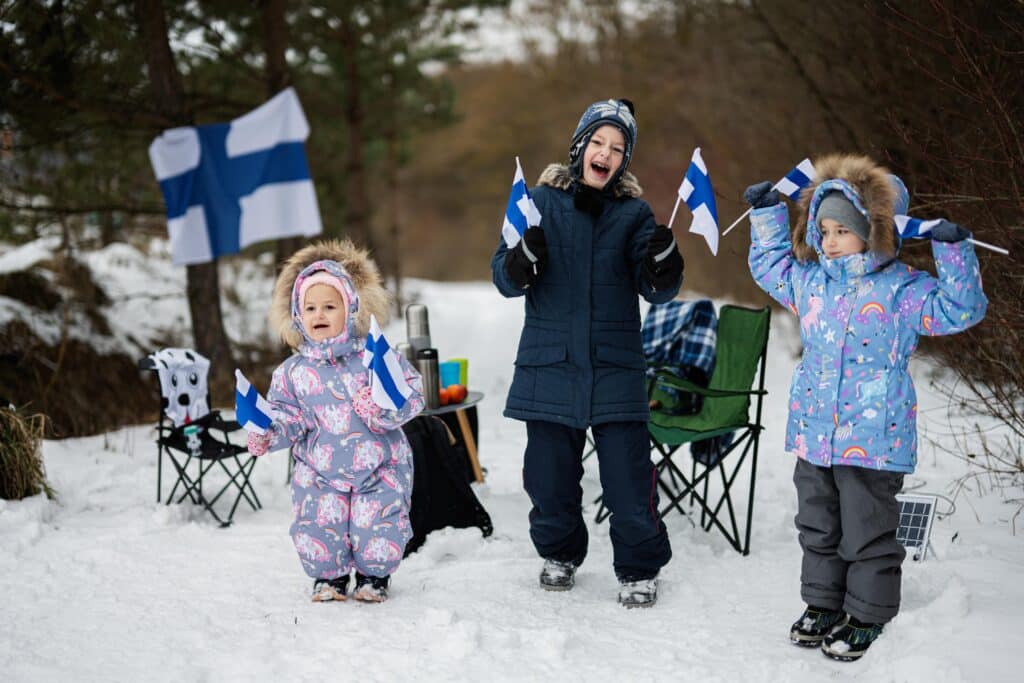
SISU is a mindset that should inform our actions. Finland provided us with a case study to follow, when they persevered against the Soviet Union in the Winter War of 1939. Those Finn’s lived out SISU during a time of great adversity. It was probably a really bad time to be in Finland. They showed us that tenacity and an unwavering spirit can overcome overwhelming odds. SISU still defines them, today. The happiest country in the world, remember? They have learned how to make the best of difficult situations and remain positive in the midst of them.
Even the ancient stoics had SISU
The ancient stoics would approve. Zeno of Citium, the founder of stoicism, lost everything in a shipwreck and made his life prosperous again. He spent his life focusing on the importance of inner peace and good living. Cleanthes, a Zeno apostle, emphasized the importance of accepting our “fate”, aligning our will, and nurturing emotional resilience. These stoics tell us that making healthy decisions, staying focused on the positive, and self-control are pathways to a good life. They had SISU before SISU was SISU.
Can you choose to have SISU or are you born with it?
I’m drawn to these ideas, because they are empowering, not passive. The Finns and the stoics, collectively shaped a philosophy around resilience, good living, and optimism. They promoted the idea that true happiness comes from within and it’s a choice. We get to decide what our attitude will be when bad things happen. We can remain passive and let adversity take us down OR embrace SISU and choose to overcome our challenges with an optimistic perseverance. An easy choice when you understand and embrace SISU.
It is not always easy to live out, though. SISU requires some mental and emotional strength, to keep pushing forward when a situation seems dire. This strength is crucial in both personal and professional realms, where we often encounter setbacks and failures. SISU encourages a proactive approach, urging us to adapt and evolve in response to difficulties rather than succumbing to despair and giving up. It empowers us and gives us permission to influence our circumstances through persistence and determination and to be resilient in the face of adversity. SISU makes it possible for us to take on life’s challenges better.
When life is the most stressful, can SISU help?
According to Kirsten Schuder and Aubrey Frietas*, the ten most stressful life events are (in order):
- Death of Spouse or Life Partner
- Incarceration
- Loss of a Close Family Member
- A Suicide Attempt By a Loved One
- Debt
- Homelessness
- Serious Illness or Injury
- Unemployment
- Marital Issues
- Death of a Close Friend
Many psychologists recommend that you seek out counseling if any one of these happen to you. When three or more events overlap, the mental health community would encourage you to get psychiatric support to manage the high probability of severe depression or other serious psychological concerns, even suicide. Understandably, it is really difficult, emotionally and psychologically, to move past these “top ten” life events. With that context, a personal story may help illustrate how SISU saved my life (this may be a bit dramatic, but it’s based on some science).
My 2018-2020 was a pretty shitty couple of years. I went through a separation and divorce, lost contact with my sons, had bilateral knee replacement that went wrong, was in debt and briefly without a home, and then lost my job and had to start a business. If we look at the “list”, I experienced six of the ten events in short order. At the time, I wasn’t very emotionally resilient or particularly “strong”, but I had a guiding, life philosophy: SISU.
I’m not stupid, I also sought out some counseling. It was the combination of the two (counseling and SISU, with a sprinkle of stoicism) that made it possible for me to navigate the awful string of circumstances (some of them self-inflicted) to a healthy(er) resolution.
We are all a “work in progress”, of course, but we can choose to whistle while we work on ourselves.
During my difficult two years, I often found myself humming the song “Always Look on the Bright Side of Life” from the Monty Python movie “Life of Brian” (circa 1979; it’s an oldie and if you haven’t seen it, warning: it’s very sacrilegious; in fact, it was banned in certain parts of Britain, Norway, the United States, and Ireland for 28 years because of the Biblical satire throughout the film. The marketing team actually used the slogan “So funny, it was banned in Norway”.)
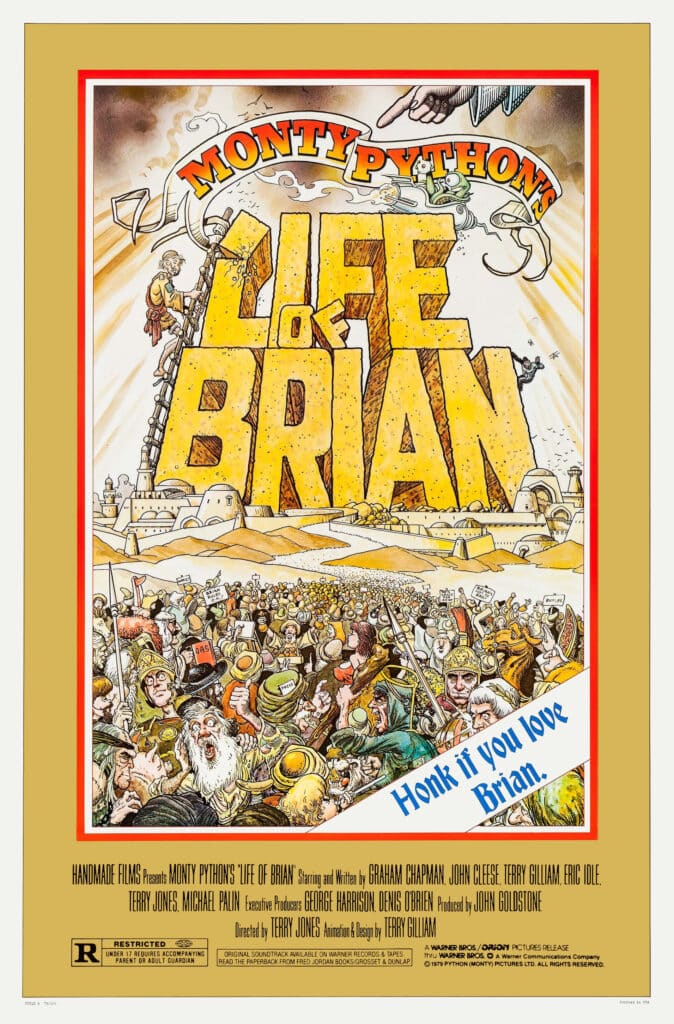
One scene is worth watching. Picture some dudes up to their necks in a pool of shit. They can’t move anything but their heads. Now, imagine that they are smiling and whistling and singing “Always look on the bright side of life”. This is a pretty good illustration of SISU (even if a bit extreme). Here are some of the lyrics:
“Some things in life are bad
They can really make you mad
Other things just make you swear and curse
When you’re chewing on life’s gristle
Don’t grumble, give a whistle
And this’ll help things turn out for the best
And always look on the bright side of life
Always look on the light side of life
If life seems jolly rotten
There’s something you’ve forgotten
And that’s to laugh and smile and dance and sing
When you’re feeling in the dumps
Don’t be silly chumps
Just purse your lips and whistle, that’s the thing
And always look on the bright side of life
Come on!
Always look on the right side of life”
It wasn’t always easy, of course, and I had some down days. But I made a choice to remain positive. SISU pulled me forward, through the tough times. I couldn’t always control what I was going through, but I always had a choice about my attitude while going through it. That’s where SISU comes in, a stoic determination to see things through to a better result.
[Time for a HUGE disclaimer and public service announcement: mental health is a serious and complex subject and one that needs to be handled thoughtfully and with professional guidance. I’m not a health care professional and I’m not giving any mental health advice here. I also don’t want anyone to misinterpret my intentions for sharing my story. I’m not spouting pseudo-psychology or suggesting that SISU is a simple solution to serious mental health issues. It will not resolve clinical depression or biochemical imbalance. I’m simply sharing a personal story to illustrate the power of SISU in my life. It was the part of my mental health recovery that was a choice. Perhaps you can get some inspiration from it. Everyone should make their own decisions about how to address their mental health concerns. Please do seek professional help if you feel depressed or suicidal.]
The role of SISU in collective support
Today, SISU is even more relevant than ever. The rapid pace of change and uncertainty in our society. The political divide, and conflict around the world. We face so many challenges and threats, it’s not surprising that we feel really bummed out. So, the choice to cultivate SISU can be a transformative, life-giving, and hopeful force to help you get through whatever tough time you are facing. We will get through it if we can remain positive and determined.
Also, I find it comforting to know that SISU has a community. People all over the world are living it and they continue to inspire us. The Finnish culture provides a model for us. Finland has a strong sense of solidarity that accompanies the concept of SISU. Finns come together in times of need, to bolster their national resilience. So can we. You are not alone in your struggle. When we embrace SISU, together, we are choosing to identify with a larger community of strong, determined and optimistic people. This sense of belonging and mutual support, creates a network (virtual and real) of individuals who we can lean on to help us overcome our challenges and to give us hope.
*Note: From The 10 Most Stressful Life Events in Order By Kirsten Schuder, Updated by Aubrey Frietas, October 15, 2022. In 1967, two psychologists named Holmes and Rahe developed a questionnaire called the Social Readjustment Rating Scale (SRRS), which was used to measure how much certain life events changed a person’s life on a scale from 0 to 100, and thus increased their stress levels. After several responses were collected using the SRRS, the scores were averaged and used to rank a variety of life events from most to least stressful. The SRRS was updated in 1973 when Cochrane and Robertson created the Life Events Inventory (LEI). This scale also measured the impact of specific life events, but include more populations of people and a wider variety of stressful life events that had been excluded from the SRRS. Both of these scales are still used today to measure stress levels in individuals. Although there is some variation between the rankings of stressful events between the LEI and the SRRS, many of the top ten stressful life events are consistent between the two inventories.