


Most of us have played Monopoly. We’ve bought Boardwalk, argued over the rules, and tried to avoid landing on someone else’s hotel. But very few people know the fascinating story behind the game, or that it offers a few leadership lessons worth considering.
The Interesting History behind the board game Monopoly
The game’s originator was a woman named, Lizzie Magie (not Charles Darrow, like most people think). Magie, was an American writer, inventor, and advocate for economic equity. Ironically, she was not a fan of capitalistic monopolies. In 1904, Magie patented The Landlord’s Game. Its purpose was educational: to demonstrate how monopolies and unequal landownership could concentrate wealth in the hands of a few while making everyone else poorer. She established two sets of rules:
- Prosperity rules: Everyone benefited when wealth was created and shared.
- Monopolist rules: Players bought up property, charged rent, and tried to bankrupt everyone else.
(Clearly, the monopolist version proved much more entertaining—and eventually became the foundation of the Monopoly game we know today.)

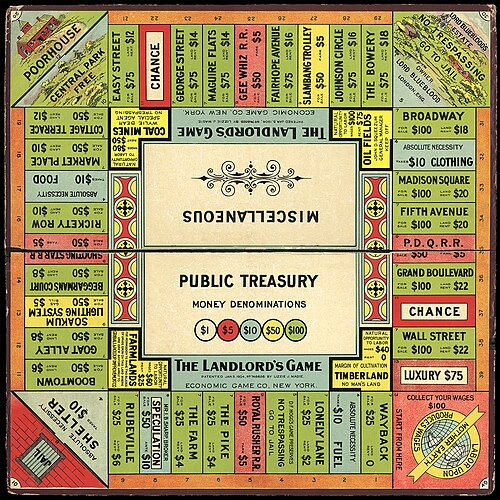
Charles Darrow learned of the game from friends who had been playing one of the “homemade” versions. This was during the Great Depression in the early 1930’s. He saw its potential, so he redesigned it, added polished artwork, and sold handmade copies. When demand grew, he approached Parker Brothers and asked them to buy the game from him. In 1935, Parker Brothers began mass-producing Monopoly. Lizzie Magie was paid $500 for her patent, without any royalties from the game sales and she was not credited as the creator of the game.
For many years, Darrow was promoted as the sole inventor and became one of America’s first millionaire game designers. Decades later, researchers uncovered documents showing that Monopoly had evolved from Lizzie Magie’s earlier, patented, invention. In the 1970s, economics professor Ralph Anspach challenged Parker Brothers in court over trademark issues. During the legal proceedings, extensive historical evidence revealed the game’s true development, documenting the role of Magie and the many communities that had modified and shared the game before Darrow commercialized it.
Sadly, Magie died in 1948, so she could not benefit financially from her invention, but she was ultimately credited with inventing the game. In true Monopolistic fashion, Darrow and Parker Brothers made millions on her idea. Monopoly became famous for encouraging players to build monopolies and bankrupt their opponents.
This is the exact behavior Lizzie Magie created The Landlord’s Game to criticize. What began as a lesson about the dangers of concentrated wealth evolved into one of the most beloved board games in history. Magie was ultimately successful in helping to teach us that healthy competition is the best way to prevent monopolies in business and smart, forward-thinking strategy is the key to maintaining a competitive position. So, let’s play. Choose your token.
What Your Choice of Monopoly Piece Might Say About You
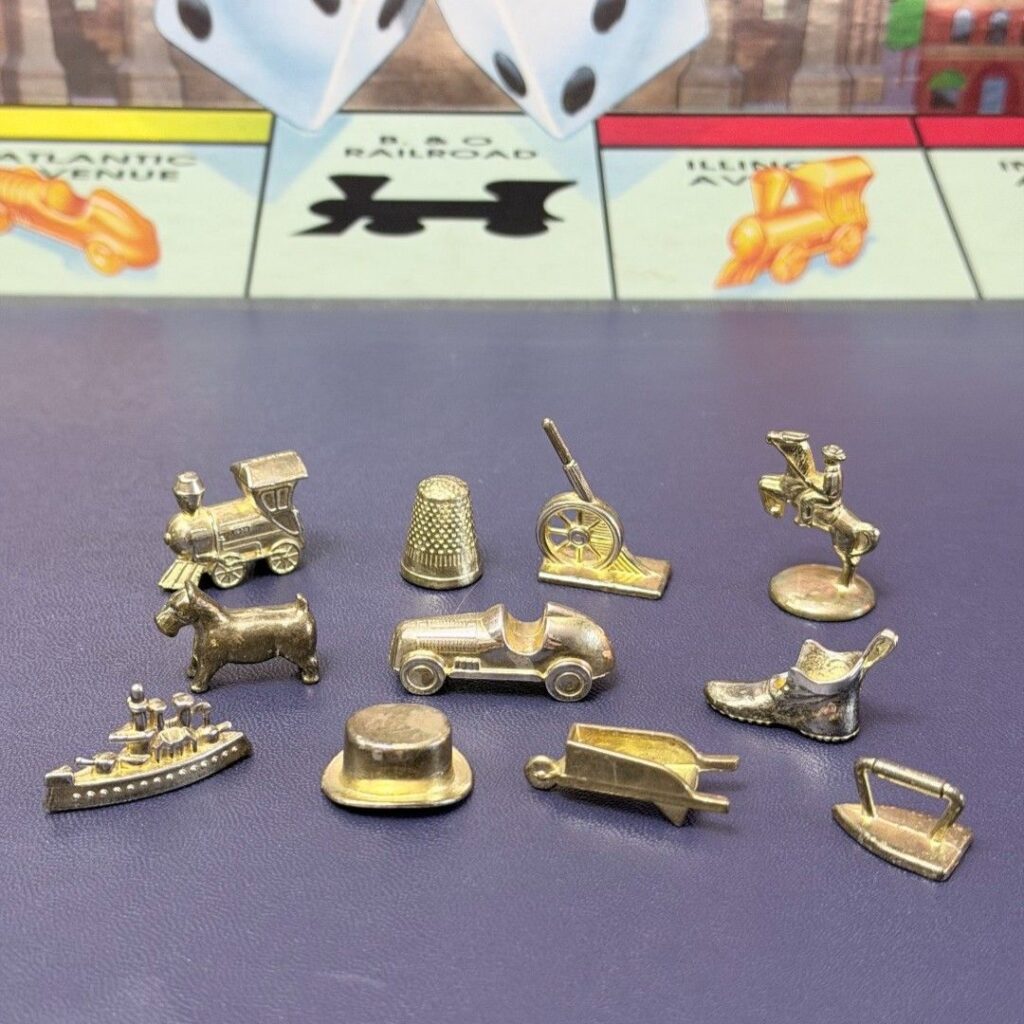
For generations, Monopoly has been a source of family rivalries, challenging financial decisions, dramatic comebacks, and experiential learning about financial competition and real estate ownership. Yet before anyone buys Boardwalk or lands in jail, every player faces an important decision: choosing a token.
At first glance, selecting a Monopoly piece seems random. You grab the one that catches your fancy or you are left with whatever is available. But if you ask a room full of players why they chose the race car, the iron, or the top hat, you’ll often hear some passionate explanations. The token becomes a tiny extension of your personality, a metallic avatar navigating the world of property acquisition and ruthless rent collection. Even when you get “stuck” with a piece, you create an identity around it.
Of course, no Monopoly piece can truly reveal your character. But it’s fun to imagine what your choice might suggest about your habits, values, and approach to life. So, in the spirit of this “fun”, I’m going to take a swing at some pseudo-psycho-science and attempt to qualify your choice of Monopoly token. Let’s start with the original six.
The Top Hat: The Executive
The Top Hat is one of Monopoly’s most iconic tokens. Players who choose it often appreciate tradition and classic style. This token symbolizes success, vision and prestige.
The personality of the “Top Hatters” might include traits like ambition, sophistication, strategic thinking, organization, and future-focus.
Top Hat leaders may see themselves as “The Executive.” They create vision, set standards, inspire confidence and think long term.
Outside the game, Top Hat enthusiasts may aspire to build a legacy, strive for excellence, lead organizations and earn respect through their wisdom.
Keywords: Vision, Achievement, Leadership
The Battleship: The Commander
The Battleship appeals to people who love planning and tactical thinking. These players often view Monopoly less as a game of luck and more as a challenge of resource management. This token symbolizes strength, strategy and protection.
Battleship people might be more strategic and analytical, calm under pressure, competitive (but not reckless), value preparation and enjoy solving difficult problems.
Battleship leaders are “The Commander.” They may be more comfortable thinking several moves ahead, making difficult decisions, excel during a crisis or challenge, and they protect their team on their way to victory.
After a game, the Battleship player is more likely to build something resilient, master complex challenges, leave a legacy of competence and become someone that others can really upon.
Keywords: Strategy, Discipline, Confidence
The Thimble: The Craftsperson
Although retired from many modern editions, the thimble was one of the original six and is a nostalgic favorite. Players who love choosing it often appreciate practicality and humility. This token symbolizes craftmanship, patience and service.
The “Thimblists” present themselves with detail orientation, thoughtfulness, patience, care and quiet confidence. It represents usefulness rather than glamour, substance over appearances.
Thimble leaders are “Craftspeople.” They develop people, improve systems, value quality and coach more than command. Thimbles are likely to make steady, sensible decisions.
They aspire to master a craft, help others succeed, create lasting value and build excellence.
Keywords: Wisdom, Precision, Humility
The Iron: The Steward
Another retired classic, the Iron, appeals to players who appreciate order and attention to detail. It symbolizes discipline, consistency and refinement.
Iron players often enjoy structure and predictability. They might prefer things to be organized, dependable, and methodical. They are more patient and responsible. Chaos should make them uncomfortable.
The Iron leader is a “Steward.” These individuals frequently have high standards for themselves and others. They also create reliable systems, value consistency and build operational excellence.
In Monopoly, they are often meticulous with money management and unlikely to make careless mistakes. Outside, they may aspire to improve organzations, build efficient systems, earn trust and create enduring quality.
Keywords: Excellence, Process, Accountability
The Boot: The Servant Leader
The Boot suggests hard work, humility and perseverance. Players who favor this token often enjoy being in the trenches.
Boots can be grounded, practical, reliable, resilient and don’t seek the spotlight.
They are “Servant Leaders”, there to help you. They prefer to lead by example, acting in such a way as to earn trust, willing to do the difficult work and focus on execution.
In Monopoly, Boot players may be comfortable making deals that benefit both parties. After the game, they probably aspire to earn genuine respect, build lasting value, be dependable and leave things better than they found them.
Keywords: Integrity, Grit, Reliability
The Cannon: The Change Agent
The Cannon appeals to people who enjoy making explosive moves. The Cannoneer is symbolized by courage, boldness and action.
Cannon people might be considered more overt, direct, fearless, competitive, high energy and more comfortable with risk.
Cannons are “The Change Agent.” They may challenge the status quo, make decisive and unexpected moves, create momentum and inspire bold action.
After a game, the Cannon holder may be more likely to create meaningful change, win important battles, make a memorable impact and lead transformation.
Keywords: Courage, Initiative, Influence
The Complete Monopoly Leadership Guide
The original Monopoly was a six-player game, and these six tokens were your only options. If you had the qualities of all six tokens, your leadership and business acumen would make you unbeatable.
As times changed, Parker Brothers added some additional pieces to the game. The table below summarizes the top sixteen.
| Token | Core Value | Leadership Style | Ultimate Aspiration |
|---|---|---|---|
| 🎩 Top Hat | Vision | Executive | Leave a lasting legacy |
| 🚢 Battleship | Strategy | Commander | Master great challenges |
| 🧵 Thimble | Craftsmanship | Craftsperson | Improve people and systems |
| 🔥 Iron | Discipline | Steward | Build enduring excellence |
| 👢 Boot | Perseverance | Servant Leader | Earn respect through work |
| 💣 Cannon | Courage | Change Agent | Transform the world |
| 🏎️ Race Car | Progress | Driver | Stay ahead through innovation |
| 👜 Purse | Resourcefulness | Connector | Create opportunities and relationships |
| 🐕 Scottie Dog | Loyalty | Coach | Build trusted communities |
| 🐱 Cat | Independence | Independent Thinker | Live authentically |
| 🚜 Wheelbarrow | Productivity | Builder | Create tangible value |
| 🦆 Rubber Ducky | Joy | Energizer | Inspire creativity and optimism |
| 🦖 T-Rex | Boldness | Visionary Challenger | Make a big impact |
| 🐎 Horse | Freedom | Pioneer | Explore new frontiers |
| 🚂 Train | Reliability | Conductor | Connecting people and systems |
| 👠 High Heel | Influence | Influencer | Shape culture and inspire others |
What Your Choice Really Says
As entertaining as these stereotypes may be, the truth is that your Monopoly token probably reveals less about your personality than your behavior during the game. The player who chooses the Scottie dog but drives ruthless negotiations may not be as gentle as expected. The race car enthusiast might be the most patient person in the room. And the top hat player could simply like how it looks.
These tokens represent different philosophies of leadership rather than “better” or “worse” personalities. Some may symbolize power (Battleship, Cannon, T-Rex), others service (Boot, Thimble, Wheelbarrow), others vision (Top Hat, Race Car), and other relationships (Scottie Dog, Purse). The most effective leaders will blend several archetypes together, for example, the vision of the Top Hat, the discipline of the Iron, the loyalty of the Scottie Dog, and the adaptability of the Cat. A person’s favorite token may therefore reveal not just how they see themselves today, but the qualities they most value and aspire to embody.
Perhaps that’s why Monopoly tokens have remained such an enduring part of the game’s appeal. They allow players to express themselves before the first dice roll. Each piece carries its own personality, history, and charm. So, the next time you sit down to play Monopoly, pay attention to which token you choose. You may not uncover a deep psychological truth, but you may learn something about how you see yourself or how you want to be seen.
Disclaimer: There is no scientific evidence that choosing a Monopoly token reliably predicts personality or leadership style. However, people often choose objects that resonate with how they see themselves, making the tokens useful as a fun metaphor or conversation starter in a leadership workshop or team-building exercise, and self-reflection.
Coming soon…
I’m developing a Construction Business Simulation. It will be the “Monopoly” for the construction industry and will help your business unit leaders understand how to create a financially healthy construction business. Stay tuned.
Keep thinking…
If this exercise got you thinking about your own leadership style, it might also be a good time to evaluate where you’re growing—and where you may have blind spots.