

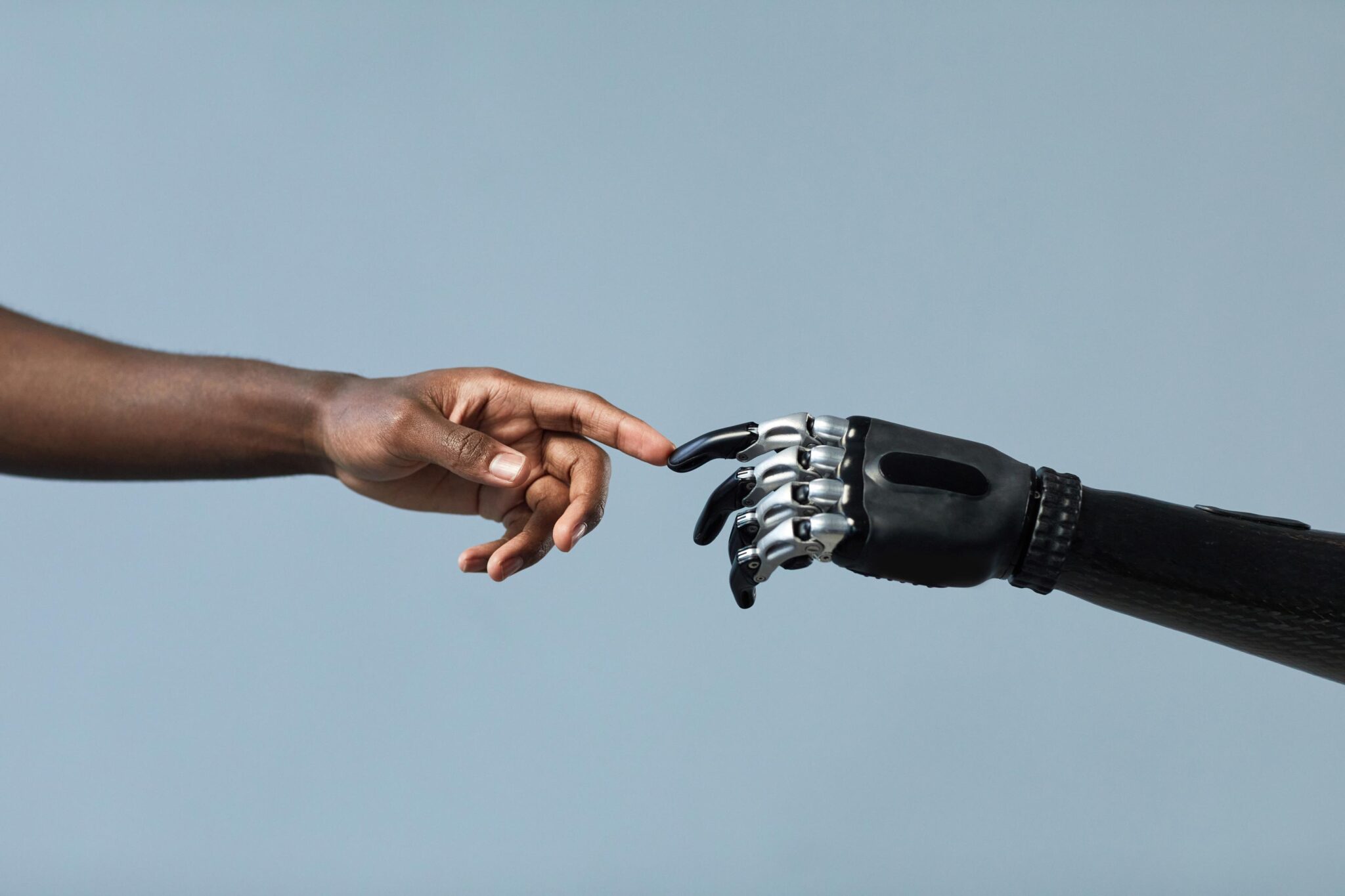
Artificial Intelligence, Human Leadership, and the Future of Work
Artificial intelligence (AI) has taken over the news. Everyone is talking about how it will change our future. It has already changed our present! The amount of investment in AI is unimaginable, at hundreds of billions of dollars and counting. The tsunami warnings are going off. We know the wave is coming, but we don’t know how big it will be or when it will hit. We also don’t know how destructive it will be. Electrical power and cash, or the lack of it, is the only thing slowing its inevitable roll out. Should we be worried?
What The Experts Say
According to Geoffrey Hinton, the Nobel Prize winner, we should be. Hinton is widely known as the “Godfather of AI,” and he has some concerns about our future. He resigned from Google in 2023, so he could speak freely about AIs risks.
This year (2025), he estimated a 10% to 20% chance that AI could wipe out humanity if it is not successfully aligned with human welfare. He thinks that traditional methods of controlling AI, such as keeping it submissive or enforcing rules, will fail once machines become significantly smarter than humans.
He posits that we need to instill a mother-baby relationship into our artificial intelligence models. “Mother-baby” is the only existing example of a more intelligent being (a mother) being “controlled” by a less intelligent one (a baby) through a bond of care and protection, not dominance. Hinton believes that our survival will depend upon how maternally motivated AI will become. Just as mothers are biologically predisposed to protect their babies, AI must be architecturally driven to ensure the survival and well-being of us humans.
“If it’s not going to parent me, it’s going to replace me,” Hinton stated, suggesting that without maternal instincts, super-intelligence may view humans as obstacles or irrelevant. So, is it even possible to make AI care about us?
Hinton admits that currently there is no technical path to embedding protective instincts into AI. He suggests that we might look to evolution to understand how protective drives become a part of a biological system and adapt it to AI. It’s important to know that artificial intelligence does not currently “feel” anything (even though it can be programmed to look like it does).
Meta’s Chief AI Scientist Yann LeCun suggests that protective “instincts” could be hard-wired, such as “don’t run people over,” which he calls objective-driven AI. Others, like Fei-Fei Li (the Godmother of AI), advocates for “human-centered AI” which focuses on human agency. In this model, humans would set the AI goals, values and constraints and we would retain control and oversight over the AI systems. We would only allow AI to support, augment, or inform human decision-making rather than replace it. In short, human agency ensures that AI is a tool people use, not an autonomous actor that dictates choices or outcomes.
Finally, some experts argue that computers lack the chemical and physiological mechanisms (like oxytocin) necessary for true bonding and caring, making “maternal AI” a simulation rather than a lived or learned experience. In other words, it is impossible for AI to truly care.
Can AI replace me?
None of these theories and models can definitively tell us how to make AI “love” us. And with so many different groups investing in its development, there is no control over what will get released into the world. So, according to the “Godfather of AI” we have a 20% chance that artificial intelligence will wipe out humanity! If I had a one in five chance of winning the lottery, I would be buying a lot of tickets. Thankfully, Hinton didn’t put a timeframe on it. Sadly, AI has already “replaced” some of us (even if it hasn’t killed anyone yet).
So, with this backdrop, I asked ChatGPT to “evaluate Andrew Patron and HELPS.biz” and tell me when AI will replace me. After all, my friends would say that my intelligence has always been artificial. Let’s find out if they are right.
This is ChatGPT’s answer…
Here’s a clear, evidence-based evaluation of Andrew “Andy” Patron and Helps.biz, and a realistic look at whether/when AI might “replace” him.
________________________________________

Who is Andrew (Andy) Patron?
Andrew “Andy” Patron is a seasoned management consultant and leadership development professional with decades of experience in construction, operations, and talent development. He:
- Has worked in the construction industry for 25–30+ years, including management engineering and consulting roles.
- Specializes in leadership training, talent development, organizational improvement, and speaking engagements.
- Is known as a trainer, speaker, and facilitator who delivers in-person and engaged learning experiences.
This is human-centric consulting, often about context, emotional intelligence, facilitation, and personal interaction — skills where humans still outperform AI.
________________________________________

What is Helps.biz / HELPS Consulting?
Helps.biz is Andy Patron’s consulting brand/website offering:
- Custom consulting, leadership development, workshops, speaking, and strategic support.
- A personalized approach where Andy listens to a company’s needs and crafts tailored solutions.
Helps.biz seems to be a legitimate personal consulting presence rather than a widely reviewed commercial platform.
________________________________________

Will AI Replace Andrew Patron?
This is a nuanced question. AI’s impact on jobs depends on the nature of the work.

What AI Can Already Do
AI tools today can:
- Analyze data and patterns quickly
- Draft reports, proposals, feedback summaries
- Generate training outlines, templates, or leadership content
- Help with routine communication and scheduling
It can automate many routine or structured tasks but doesn’t understand people like a human consultant does.

What AI Struggles With
Roles that rely on:
- Human empathy and emotional intelligence
- Live facilitation and group dynamics
- Deep contextual judgment
- Real-world experience and nuanced strategy
…are much harder for AI to replace directly, at least in the foreseeable future. Many business leaders agree:
- AI may automate data analysis and support tasks, but human consultants bring empathy and nuanced advice. Forbes
- Even proponents of AI stress that successful future consultants will use AI as a tool rather than be replaced by it. Forbes

What Research Says on AI Job Replacement
- Only an estimated ~16–25% of SMB jobs that AI tools are currently replacing — even in early adoption phases — with projections rising gradually. SMB Group
- Surveys show many business leaders don’t believe AI will fully replace people; instead, it will augment their capabilities. Verizon
- Some employers plan AI-driven replacement for specific tasks or roles in the near future (e.g., 2026), primarily in administrative or support functions. Hackr

So When Could AI Replace Andrew Patron?
There’s no clear timestamp, but based on current tech and expert opinion:
- By 2026–2030: AI will likely take over some analytical and routine tasks within consulting.
- Longer term (beyond 2030): AI could automate more of what consultants do if AI reaches human-level contextual understanding (which most experts think is far off).
- However, AI replacing a senior human consultant entirely — especially one focused on human development and interpersonal transformation — is unlikely in the next decade without a fundamental breakthrough in human-like reasoning and empathy.
In other words: AI will change how consultants work more than it will fully replace them.
________________________________________
Bottom Line
- Andy Patron is a legitimate, experienced consultant focused on human-centered leadership and organizational development.
- Helps.biz is his consulting brand/website — not widely reviewed publicly, but consistent with small business consultancies.
- AI will transform consulting by automating routine parts of the job, but it won’t fully replace the human judgment, empathy, and real-world experience required in leadership development anytime soon.
So it appears that my job is safe for at least the next 4-5 years. Not so for some other jobs.
Here’s an AI, data-driven overview of the top 20 jobs in America by number of people doing them (most recent detailed employment estimates available), plus realistic projections on AI impact and when those roles may be replaced or transformed. Most projections come from the U.S. Bureau of Labor Statistics and reputable labor-market analysis; AI disruption estimates are based on multiple expert forecasts.
________________________________________
Top 20 Jobs in the U.S. by Number Employed (Approx.)
The following are the largest individual occupations based on total employment (most recent comprehensive listing available): MyPlan
| # | Occupation | Approx. Number Employed (U.S.) |
|---|---|---|
| 1 | Retail Salespersons | ~4,448,000 |
| 2 | Combined Food Prep & Serving Workers (incl. fast food) | ~3,676,000 |
| 3 | Cashiers | ~3,635,000 |
| 4 | Office Clerks, General | ~2,973,000 |
| 5 | Registered Nurses | ~2,952,000 |
| 6 | Laborers & Freight, Stock, Material Movers | ~2,893,000 |
| 7 | Customer Service Representatives | ~2,871,000 |
| 8 | Waiters & Waitresses | ~2,582,000 |
| 9 | General & Operations Managers | ~2,290,000 |
| 10 | Personal Care Aides | ~2,212,000 |
| 11 | Secretaries / Administrative Assistants (excl. medical/legal) | ~2,165,000 |
| 12 | Janitors & Cleaners | ~2,156,000 |
| 13 | Stock Clerks & Order Fillers | ~2,056,000 |
| 14 | Heavy & Tractor-Trailer Truck Drivers | ~1,800,000 |
| 15 | Bookkeeping, Accounting, Auditing Clerks | ~1,530,000 |
| 16 | First-Line Supervisors of Office/Admin Support | ~1,478,000 |
| 17 | Nursing Assistants | ~1,451,000 |
| 18 | Elementary School Teachers (excl. special ed) | ~1,411,000 |
| 19 | Maintenance & Repair Workers | ~1,384,000 |
| 20 | Sales Representatives, Wholesale & Manufacturing | ~1,350,000 |
________________________________________
AI Impact on Jobs — What Research Shows
Important: AI isn’t a light switch — it affects tasks within jobs, not always entire occupations all at once. Many experts expect augmentation (humans + AI) before full replacement. National University+1

AI Automation Projections
By 2030, about 30% of U.S. jobs could be fully automated and up to 60% could see significant task changes due to AI. National University
Sector-specific automation risk varies widely: office/admin jobs, repetitive routine work, and basic data processing are most vulnerable early. All About AI
Some forecasts (scene setting, not precise consensus) suggest 40% or more of jobs exposed to AI risk by 2030 depending on definitions. The Times
________________________________________
Likely AI Replacement Timeline by Occupation
Below is a realistic estimate of when AI/automation might replace or heavily transform each of the top 20 jobs if current trends continue, based on industry forecasts. This is not precise, but grounded in current tech capability and expert analysis.
| Occupation | AI Impact Timing | Notes |
|---|---|---|
| Retail Salespersons | 2030–2035+ | Partial automation via kiosks and AI assistants; humans still needed for customer help. (All About AI) |
| Fast Food & Food Prep Workers | 2030–2035+ | Robotics and AI ordering booths reduce roles; full replacement is slower. (All About AI) |
| Cashiers | 2027–2030 | High risk; self-checkout and AI payment systems already widespread. (All About AI) |
| Office Clerks, General | 2028–2032 | Routine clerical tasks can be automated; human oversight remains early on. (National University) |
| Registered Nurses | 2040+ (if ever) | Requires empathy, judgment, and human presence—AI assists but won’t fully replace soon. (National University) |
| Material Movers / Warehouse Roles | 2030–2035 | Robotics already advancing rapidly; major firms plan increased automation. (The Verge) |
| Customer Service Representatives | 2028–2032 | Chatbots and AI interfaces replace many tasks; human escalation still common. (All About AI) |
| Waiters & Waitresses | 2035+ | Robots may supplement service, but social interaction is hard to replace. (National University) |
| General Managers | 2040+ | Strategic decision-making and leadership are difficult for AI to replicate. (National University) |
| Personal Care Aides | 2050+ | Strong human empathy required; among the least automatable roles. (National University) |
| Administrative Assistants / Secretaries | 2028–2032 | Scheduling, emails, and data entry automatable; interpersonal roles persist. (All About AI) |
| Janitors & Cleaners | 2035–2045 | Robotic cleaners exist, but human versatility slows full replacement. (National University) |
| Stock Clerks & Order Fillers | 2032–2038 | Warehouse robotics growing; humans still needed for complex tasks. (The Verge) |
| Truck Drivers | 2035–2045 | Autonomous vehicles face regulatory and safety hurdles. (National University) |
| Bookkeepers / Accounting Clerks | 2028–2032 | AI financial tools automate many ledger tasks; oversight remains. (All About AI) |
| Supervisors (Office/Admin) | 2035–2040 | Some analytics automated, but human leadership remains essential. (National University) |
| Nursing Assistants | 2040+ | Human care and empathy make replacement difficult. (National University) |
| Elementary School Teachers | 2040+ | AI can supplement teaching, but not replace relational education. (National University) |
| Maintenance & Repair Workers | 2040+ | Many tasks require human judgment and physical adaptability. (National University) |
| Sales Representatives (Wholesale) | 2035–2040 | AI assists forecasting, but human negotiation persists. (National University) |
Summary:
- Jobs with repetitive, routine tasks (cashiers, office clerks, customer service reps) are most at risk first, often by late 2020s to early 2030s. All About AI
- Jobs requiring human interaction, empathy, complex judgment, creativity, or physical adaptability (nurses, teachers, personal care) are least likely to be fully replaced soon — many may be augmented by AI. National University
What Does This Mean for Us?
So, if you ask AI, most of us humans will remain relevant until at least 2030. After that, who knows how smart and/or caring it will become or how necessary we will be. Routine and predictable tasks are already being replaced. Many entry level jobs are no longer necessary.
For example, senior programmers use AI to generate basic coding, then correct it before sending it along. Entry level programmers have largely been replaced by AI. This has created a talent gap. There is no longer a development pipeline for senior programmers. Where will they come from? A new way of developing talent, using AI, will need to be created. The best-in-class companies are already working on this gap. Navigating the downsizing and the recalibration of the workforce will be tricky business. Talent development must become a central focus for companies that want to remain scalable.
The good news is that even though it is possible to create artificial intelligence, emotional intelligence is still only possible for humans.
So, being human has tremendous value and cannot be replaced. Human-centric jobs should remain stable well beyond 2040. In the next few years, AI will change, but not eliminate, most jobs. Experts generally agree that it is more likely that we will see a lot of partial automation of tasks rather than full job replacement, with most jobs seeing some disruption within the next 4-5 years. So, companies that adapt quickly to AI and integrate the advances most effectively will benefit the most. Leadership will be required and leadership is uniquely human.
Finally, we should count on our human resilience and creativity to invent new jobs, jobs that only humans are qualified to fill. We will learn how to let AI do more of our thinking, and, it is my hope, that we will use that extra capacity to increase our emotional intelligence and leadership decision-making. It is possible, (if AI doesn’t wipe us out), that we will evolve into more capable leaders and better human beings.