

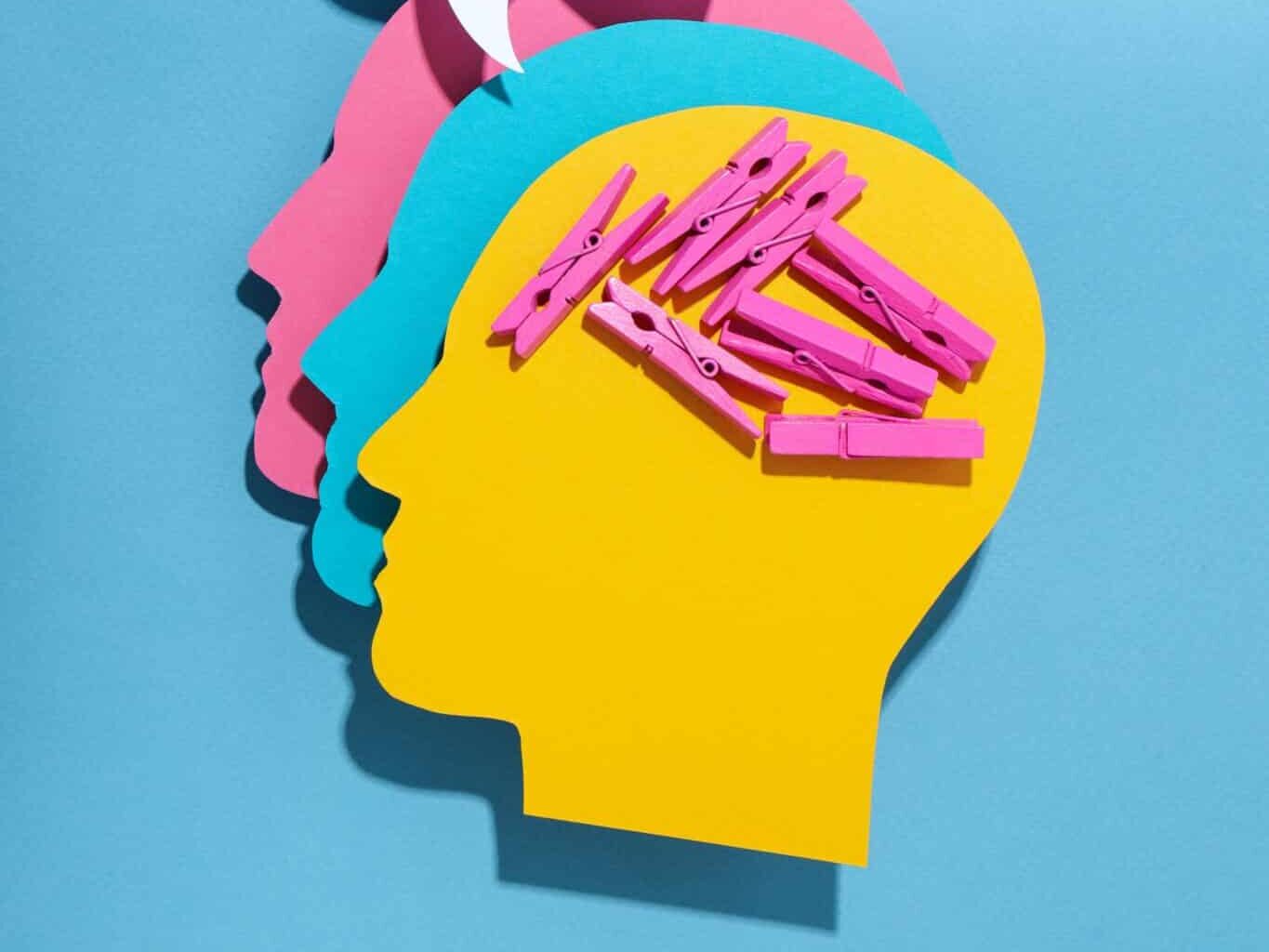
There is a question so ordinary that we rarely stop to consider how extraordinary it is: “What are you thinking about?” Ask it of another human being and, almost always, there is an answer. “I was thinking about my family.” “I was wondering what I should do next.” “I can’t stop thinking about that conversation.” “I was remembering something that happened years ago.”
Even when the answer is “nothing,” there is usually something behind the answer—a feeling, a memory, an observation, a question, or a wandering stream of consciousness. The ability to think, ponder, wonder, question, imagine, and search for meaning is so fundamental to being human that we can easily overlook its significance.
Now ask an artificial intelligence, “What are you thinking about?” The answer is fundamentally different. AI does not simply sit somewhere contemplating the world. It responds to information, prompts, patterns, and instructions. Ask it what it is thinking about, and it needs more information: What would you like me to think about? What question should I consider? What problem should I solve? That distinction matters enormously.
AI can process, analyze, generate, and assist—but human beings must remain the ones who decide what is worth thinking about.
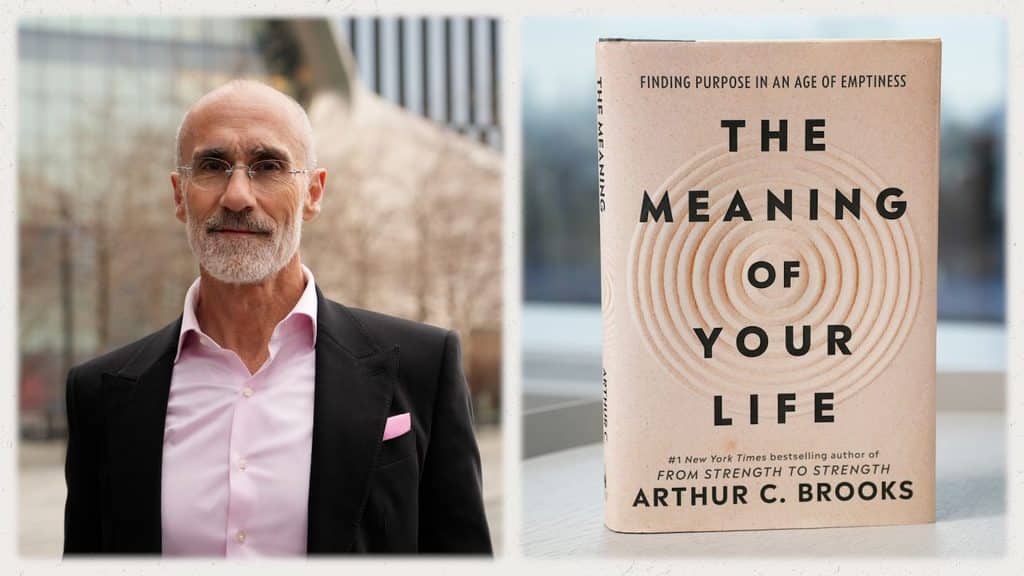
Arthur Brooks’s The Meaning of Your Life provides an important framework for understanding why. Brooks argues that a meaningful life requires more than pleasure, achievement, or success. Meaning involves coherence, purpose, and significance: understanding how our lives fit together, having something worth pursuing, and knowing that our existence matters beyond ourselves. None of these can be reduced to simply accumulating information or optimizing outcomes. They require reflection. They require a human being to stop, look inward and outward, and ask the most important question of all: Why? AI does not ponder its existence.
Modern life makes that kind of thinking increasingly difficult. We are surrounded by devices designed to capture our attention and systems designed to anticipate our preferences. We scroll, consume, react, purchase, comment, and move on. Brooks describes this pattern as a kind of “doom loop,” in which distraction and instant gratification can gradually crowd out deeper thought. The danger is not merely that we waste time. The greater danger is that we become so accustomed to being entertained, informed, and directed that we stop exercising our own capacity to think.
Thinking is not the same as knowing. AI knows a lot!
We can know thousands of facts and still have no idea what makes a life worthwhile. We can ask AI to summarize a book, analyze a problem, compare alternatives, write an argument, or produce a plan. These capabilities are extraordinarily useful. But they do not answer the prior human question: What should I care about?
That question belongs to us humans.
Brooks emphasizes the importance of asking fundamental questions rather than simply pursuing predetermined answers. Human beings do not merely solve problems; we have the capacity to wonder whether we are solving the right problem. We can question our assumptions, reconsider our ambitions, imagine another person’s perspective, and change our minds. We can ask whether success is actually making us happy, whether our work contributes something worthwhile, whether our relationships deserve more attention, and whether the life we are building is one we genuinely want to live.
This capacity to ponder is intimately connected to freedom.
If we allow AI to do our thinking for us, we risk surrendering something far more valuable than intellectual effort. We risk surrendering judgment. An AI can tell us what is probable, efficient, popular, persuasive, or consistent with available information. But it cannot legitimately determine what our lives mean. It cannot decide whom we should love, what sacrifices are worth making, what principles we should defend, or what kind of person we should become.
Those decisions require a human conscience.
This is particularly important because AI can be remarkably convincing. Its fluency can create the impression of wisdom. A polished answer can feel like a thoughtful answer. But eloquence is not the same as judgment, and information is not the same as meaning. The more capable AI becomes, the more important it will become that human beings preserve the habit of thinking independently.
Never give AI the power to think for you. Give it the power to help you think better.

AI can challenge our assumptions, present opposing arguments, identify possibilities we overlooked, organize information, and help us explore tough questions. Used properly, it can become a powerful intellectual partner. But the human being must remain the author of the questions, the evaluator of the answers, and ultimately the person responsible for the decision.
Brooks’s emphasis on relationships makes this even clearer. Meaning is found not simply in what we accomplish but in what we give to others. Love requires attention, vulnerability, sacrifice, and presence. No algorithm can love a child, comfort a friend, mourn a parent, or experience gratitude for a beautiful sunset in the human sense. These experiences matter precisely because they are lived rather than calculated. AI cannot “love.”
The same is true of beauty and suffering. Brooks argues that beauty can awaken us to realities larger than ourselves, while suffering, when properly confronted, can become a source of wisdom and compassion. Both require us to pause. Both require us to interpret experience rather than merely consume it. A machine may describe a sunset or analyze a work of art, but the human being can stand before it and feel wonder. A machine can explain grief, but a human being can suffer, remember, love, and emerge from suffering with a deeper understanding of another person’s pain.
To think, therefore, is not merely to manipulate information inside a brain. To think is to engage with existence. To ponder, to remember the past and imagine the future. It is to wrestle with uncertainty. It is to ask questions that may never have definitive answers. It is to examine our motives, confront our failures, appreciate beauty, love other people, and wonder why any of it matters.
That is why the simple question “What are you thinking about?” carries such weight.
When we ask it of another person, we are not merely asking for data. We are asking to enter another human being’s inner world. We are asking what has captured their attention, what they value, what concerns them, what they hope for, and what they are trying to understand.
And perhaps we should ask ourselves that question more often.
What am I thinking about?
Not what is trending. Not what the algorithm recommends. Not what everyone else believes. Not what AI tells me to believe.
What am I thinking about?
The future of AI will undoubtedly bring extraordinary capabilities. But the central challenge may not be whether machines can think more like humans. It may be whether humans continue to think like humans.
Pause. Wonder. Question. Reflect. Disagree. Imagine. Remember. Ponder.
Use AI. Learn from it. Challenge it. Ask it questions. Let it expand your possibilities.
So, THINK. Never surrender the question that makes you human:
“What are you thinking about?”