


Part One of Bridging the chasm between pro- and anti-Trump ideology (or any other divisive beliefs/positions/views):
What are we up against?
Let’s dive into this important topic: bridging the chasm of division and tribalism. Frankly, it is taking me longer than I thought to complete this piece of writing, because I know that there are a lot of landmines out there. So, I want to be careful and thoughtful about what I say and how I say it. You see, I don’t want to alienate anyone or make people feel uncomfortable or threatened. Is that so strange or unusual? It sure seems to be.
My observation is that there are a lot of people “out there” who just don’t seem to care if they piss other people off. They share their opinions and beliefs “violently” and without any regard for the views, feelings or ideas of others. The loudest voices seem to be the least respectful. And now, more than ever, we all deserve (cue Aretha Franklin) a little more respect.

If you are someone that really doesn’t care what other people think, well, you are making it much more difficult for the rest of us. I am not your enemy, just because I see things differently. I think we can all be better than that.
The Social Media Challenge
Challenge number one… Social media has amplified the angry, fearful voices and given the intellectually impotent permission to say whatever they want without regard for the social consequences of their words and attitudes. I’m told that the social media algorithms like these extremes, which really sucks. Artificial Intelligence rewards the rude and disrespectful people with more followers, which only serves to further divide us. This is a false divide, engineered by a digital “mind”. I get why these platforms want this. AI doesn’t have feelings, it is just math. It is designed to manipulate us, it is working, and it sells.
Real, human intelligence should be better than this. Our thoughts are not always logical, data driven or predictable. Humans have feelings and we should care about that and each other. If we don’t, who will? I can promise you that Siri and Alexa don’t give a crap about you or your feelings. We, the people, should start to reward thoughtful and kind discourse and discourage emotionally violent rhetoric. I’m not saying that you shouldn’t have strong opinions or feelings about some things. Just be more considerate in expressing them. Control yourself, because you can (if you want to). Freedom of thought and, its sibling, freedom of speech, are the foundations of our democracy. People are drawn to America because they want to abide in a country where they can believe, think and live the way they want to, in peace. This is one of the tenets that makes America great. So, why are we letting AI (and its fuel source) divide us? Let’s stop that.

Let’s make America great again. Uh oh, there’s a big landmine. Are you offended or encouraged? I used President Trump’s slogan on purpose, of course, to make a point. Don’t we all want America to be great? Or were you triggered by the slogan and/or the man who “trademarked” it? I am using it now (“Make America Great Again”), for my own purpose, not his. It’s easy to take offense, become defensive, and then, go on the offensive. We have a leader that does not model the social behavior, respect, and self-control we need in today’s bifurcated society. He benefits from the divide, we do not.
The “Resisting the Urge to be Disrespectful” Challenge
Challenge number two… resisting the urge to be disrespectful when someone disagrees with us, when our President’s example seems to give us permission to be blunt and uncaring. Our fellow Americans are not our enemies. There is no doubt that Trump has proven to be a powerful agent for change. His approach is very different than the bureaucratic decision-making we are used to from our elected aristocracy. Time will tell whether his “America First” policies will be great for America, but most people would agree that he is not very diplomatic. Some people really appreciate his approach and others find him very offensive. I can see both sides, but I also don’t see the value in being overtly mean. I am asking us all to be better listeners, more objective, mentally and emotionally stronger, and kinder. Especially when you are confronted with provocation or a differing view.
Good people can disagree. That is, uniquely, a human response and requires real intelligence not the artificial kind. It is simple; just don’t be a jerk. Resist the impulse to think that it is your job to convince people that they are wrong (no issue is ever that black and white). Don’t follow the lead of our elected officials and media. Let Trump be our “bad cop”, so the rest of us can be the “good cops”. Be more thoughtful and respectful and kind. We should try to set a better example for our children and the rest of the world. Our mental health, ability to nurture relationships and the strength and reputation of our nation depends upon it. The world is watching us (now more than ever). After all, we are “a shining light on the hill” for how democracy and free speech should work. Let’s act like we know what we are doing. We can do this. There is better in us. If you are still reading, I have some ideas for us to ponder.
So, What Happens Next?
Make a plan and be ready and willing to find common ground. Bringing pro- and anti-Trump supporters together is no small feat, but it is a critical endeavor for the nation’s future. By finding common ground, promoting mutual respect, encouraging open dialogue, building bridges through shared experiences, and leveraging the influence of leaders, it is possible to mend the fractures within the American political landscape. The journey toward unity requires patience, empathy, and a commitment to the greater good. Ultimately, the strength of our nation lies in our ability to come together despite differences and work collaboratively toward a brighter future.
(Author’s aside: If you enjoy being provocative and/or being liked or disliked for clicks, this blog is not for you. My hope is that the majority of us can learn how to ignore the harsh, disrespectful voices. We can listen to understand people. After all, they share our freedom to think and speak and vote. That’s what’s coming, by the way. Society will figure out how to compartmentalize and isolate the rudest, most divisive and disrespectful voices. That day cannot come soon enough).
Part Two of Bridging the chasm between pro- and anti-Trump ideology (or any other divisive beliefs/positions/views):
What can we do about it?
So, let’s get better at bridging our philosophical divisions and learn to nurture relationships with effective human to human communication. Let’s face it, disagreeing with each other isn’t a recent phenomenon. It has been around a long time. Adam and Eve argued in the garden of Eden, for heaven’s sake (the apple incident) but they worked it out. Conflict is an inevitable part of any relationship. So, we really should learn how to manage it effectively.

Let’s consider that there have been some pretty impressive societal rifts in our history: Our Civil War (the economics of slavery), The Vietnam War and the Civil Rights Movement (protecting democracy and human rights). People were very fired up about these issues at the time, for and against. There were passionate speeches. The dissenting and assenting voices got louder and louder. There were majorities and minorities and right and wrong. There were protests and marches. All without the megaphone of social media, amplifying the extremes. Even so, violence ensued, and people were killed. And now, we have the “Trump effect”, a decidedly divisive figure. A lot of people are fired up. We have some choices to make, as Americans. Can we disagree without hating (or killing) each other? History is not on our side.
So. what can we do to prevent further divide? In his book “Supercommunicators,” Charles Duhigg delves into effective techniques that can help us bridge the gaps across ideology and worldview. He describes three techniques that can help us all interact in more healthy ways: 1) looping for understanding, 2) having learning and “who are you” conversations, and 3) eliminating barriers like social media, identity threats, and the need to control. Let’s learn how to use these tools to maintain and nurture our most important human relationships (or any human relationship for that matter).
Looping for Understanding
Looping for understanding is one of the fundamental techniques for resolving conflict by ensuring that all parties involved feel heard and understood. It is a method that focuses on active listening and confirmation of comprehension.
- Active listening: fully concentrating on what the other person is saying, without interrupting or planning your response while they speak. This demonstrates respect and shows that you value their perspective.
- The Looping Technique: once the other person has expressed their thoughts, you “loop” back by summarizing what they said and asking for confirmation. For example, “If I understand you correctly, you’re saying that you felt overlooked during the meeting because your suggestions weren’t acknowledged. Is that right?” This ensures that you have accurately grasped their point of view and gives them the opportunity to clarify if necessary. Your tone should be genuine and thoughtful, not sarcastic.
- Empathy and Validation: empathizing with the other person’s feelings and validating their experiences can diffuse tension. Phrases like “I can see why you would feel that way” or “It sounds like that was really frustrating for you” can help the other person feel understood and respected. Showing that you care really does go a long way toward more open communication.
Learning and “Who Are You” Conversations
Learning and “Who Are You” Conversations are a way of building deeper relationships. It requires more than just resolving conflicts; it involves understanding each other’s values, motivations, and experiences. Learning and “who are you” conversations are designed to foster a deeper connection.
- Learning Conversations: both parties approach the discussion with the intent to learn from each other. This involves asking open-ended questions like, “Can you tell me more about why this issue is important to you?” or “What experiences have shaped your views on this topic?”
- “Who Are You” Conversations go beyond the surface level to explore each person’s identity and core values. Understanding someone’s background, beliefs, and motivations can provide valuable context for their actions and reactions. Questions like “What experiences have been most influential in shaping who you are?” or “What values are most important to you in a relationship?” can lead to meaningful exchanges that strengthen bonds.
Eliminating Barriers to Communication
Eliminating barriers to communication starts with creating an environment where all parties feel safe and open. Certain barriers, such as social media, identity threats, and control dynamics, can hinder this process.

- Reducing social media influence: social media can often amplify misunderstandings and escalate conflicts. Limiting the role of social media in conflict situations can help ensure that discussions remain focused and constructive. Encourage face-to-face or voice-to-voice conversations where tone, body language, and empathy are more effectively conveyed. Recognize that the platforms are designed to only “feed you” what you want to see. There could be some truth it is filtering out. Try to keep an open mind to another point of view or perspective.
- Addressing identity threats: identity threats occur when individuals feel that their core beliefs or values are being challenged or dismissed. To mitigate this, it’s essential to approach conversations with respect and an open mind. Acknowledge the other person’s identity and affirm their right to hold their beliefs, even if you disagree. Phrases like “I respect that this is important to you” or “I understand that this is a significant part of your identity” can help reduce defensiveness.
- Balancing control dynamics: power imbalances and control dynamics can exacerbate conflicts (we have seen this in real time during prime time). Strive for an equitable distribution of control in conversations by ensuring that everyone has an opportunity to speak and contribute. Avoid dominating the discussion and be mindful of interrupting or dismissing others’ viewpoints. Establishing ground rules for respectful communication can help maintain a balanced and fair dialogue.
Continue Developing Emotional Intelligence
It will not be easy. Especially with the loud and unrelenting echo chamber of social media and bad examples all around us. You will need to develop some emotional intelligence and embrace the positive determination of SISU.
Emotional intelligence plays a crucial role in maintaining relationships during conflict. Being aware of your own emotions and those of others can help you navigate difficult conversations with sensitivity and care (check out Emotional Intelligence 2.0 by Travis Bradberry and Jean Greaves).
- Self-Awareness: recognize your own emotional triggers and biases. Being aware of what sets you off can help you manage your reactions and respond more thoughtfully during conflicts.
- Self-Management: the practice of regulating yourself by taking a moment to pause and breathe before responding. This can prevent knee-jerk reactions that escalate conflicts and allow you to approach the conversation with a calm and composed mindset.
- Empathy: involves understanding and sharing the feelings of others. Putting yourself in the other person’s shoes and imagining how they might feel can help you respond with compassion and understanding. Being aware of what is going on around us in the social environment and managing those relationships in a healthier way.

Identify Shared Values and Goals
One of the first steps toward unity is identifying shared values and goals. Regardless of political affiliation, most people desire economic stability, safety, freedom, and justice. Focusing on these commonalities can help shift the narrative from adversarial to collaborative.
- Economic Prosperity: both pro- and anti-Trump supporters generally agree on the importance of a robust economy. Discussions around policies that boost job creation, support small businesses, and enhance workers’ rights can provide a fertile ground for collaboration.
- Community Safety: safety is a universal concern. Initiatives aimed at reducing crime, improving police-community relations, and enhancing emergency preparedness can unite people in their efforts to create safer neighborhoods.
- Patriotism: love for the country is a powerful unifying factor. Celebrating national achievements, honoring service members, and participating in civic duties can foster a sense of shared identity.
Promote Mutual Respect
Promote mutual respect. This is fundamental to any effort at reconciliation and unification. Recognizing the humanity and dignity of those on the opposite side of the political spectrum is crucial for meaningful engagement.
- Active Listening: encourage both sides to listen actively without interrupting or judging. Understanding the reasons behind differing viewpoints can reduce animosity and pave the way for empathy.
- Civil Discourse: promote conversations that prioritize respect over winning an argument. Establishing guidelines for civil discourse can prevent discussions from devolving into heated confrontations.
- Recognizing Legitimate Concerns: acknowledge that both pro- and anti-Trump supporters have legitimate concerns and grievances. Validating these feelings can reduce defensiveness and open the door to constructive dialogue.
Create Safe Spaces for Open Dialogue
Open dialogue is essential for bridging divides. Creating safe spaces for conversations where individuals feel comfortable sharing their perspectives without fear of retribution is key.
- Town Halls and Community Forums: organize town halls and community forums where people from both sides can come together to discuss issues. I recommend that you establish clear communication expectations and place skilled moderators who can help guide these conversations and ensure that they remain productive and respectful.
- Intergroup Dialogue Programs: implement intergroup dialogue programs in schools, workplaces, and community centers. These programs can facilitate structured conversations that promote understanding and collaboration.
- Media Literacy: encourage media literacy to help individuals critically assess information sources. Reducing misinformation and promoting fact-based discussions can lead to more informed and nuanced conversations.
Connect Through Shared Experiences
We can also build bridges through shared experiences. These can foster bonds and reduce polarization. Creating opportunities for pro- and anti-Trump supporters to work together on common projects can humanize the “other” side.
- Community Service Projects: engage in community service projects that benefit everyone, such as neighborhood clean-ups, food drives, and disaster relief efforts. Working side by side can break down stereotypes and build camaraderie.
- Cultural Events: Host cultural events that celebrate diversity and heritage. These events can provide a platform for people to learn about each other’s backgrounds and find common ground in shared experiences.
- Dialogue-Based Workshops: offer workshops that focus on conflict resolution, empathy-building, and communication skills. These workshops can equip participants with the tools needed to navigate difficult conversations.
Leaders Lead the Way
Leaders play a crucial role in setting the tone for unity. Political, community, and religious leaders must model respectful behavior and promote inclusive dialogue. When they don’t, you must lead yourself.
- Leading by example by demonstrating civility, empathy, and a willingness to engage with those who hold opposing views. And when they don’t we should. Our actions can inspire others to follow suit.
- Advocate for policies that are inclusive and address the needs of all community members. Inclusive policies can reduce feelings of marginalization and foster a sense of belonging. Let’s remove the “all or nothing”, “right and wrong” thinking.
- Make public statements that emphasize the importance of unity, mutual respect, and collaboration. Leaders can use their platforms to call for an end to divisive rhetoric and promote reconciliation.
Conclusion
Maintaining relationships during conflict requires a combination of effective communication techniques, emotional intelligence, and a commitment to understanding and respecting each other’s perspectives.
By employing strategies like looping for understanding, having learning and “who are you” conversations, and eliminating barriers to communication, individuals can navigate conflicts with grace and build stronger, more resilient relationships. The insights from Charles Duhigg’s “Supercommunicators” provide valuable guidance for anyone seeking to bridge gaps and foster meaningful connections in the face of disagreement. Ultimately, the key to maintaining relationships lies in our ability to communicate with empathy, respect, and an open mind.
I will close with the transcripts from some of the greatest speeches of all time. They are still relevant today.
Click the arrows below to expand the text and read any of the speeches you like:
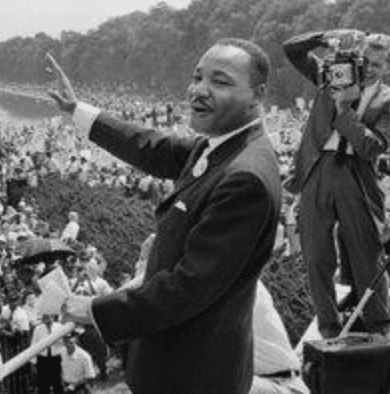
Rev. Martin Luther King Jr. “I have a dream”
Five score years ago, a great American, in whose symbolic shadow we stand today, signed the Emancipation Proclamation. This momentous decree came as a great beacon light of hope to millions of Negro slaves who had been seared in the flames of withering injustice. It came as a joyous daybreak to end the long night of their captivity.
But 100 years later, the Negro still is not free. One hundred years later, the life of the Negro is still sadly crippled by the manacles of segregation and the chains of discrimination. One hundred years later, the Negro lives on a lonely island of poverty in the midst of a vast ocean of material prosperity. One hundred years later the Negro is still languished in the corners of American society and finds himself in exile in his own land. And so we’ve come here today to dramatize a shameful condition. In a sense we’ve come to our nation’s capital to cash a check.
When the architects of our republic wrote the magnificent words of the Constitution and the Declaration of Independence, they were signing a promissory note to which every American was to fall heir. This note was a promise that all men — yes, Black men as well as white men — would be guaranteed the unalienable rights of life, liberty and the pursuit of happiness.
It is obvious today that America has defaulted on this promissory note insofar as her citizens of color are concerned. Instead of honoring this sacred obligation, America has given the Negro people a bad check, a check which has come back marked insufficient funds.
But we refuse to believe that the bank of justice is bankrupt.
We refuse to believe that there are insufficient funds in the great vaults of opportunity of this nation. And so we’ve come to cash this check, a check that will give us upon demand the riches of freedom and the security of justice.
We have also come to this hallowed spot to remind America of the fierce urgency of now. This is no time to engage in the luxury of cooling off or to take the tranquilizing drug of gradualism.
Now is the time to make real the promises of democracy. Now is the time to rise from the dark and desolate valley of segregation to the sunlit path of racial justice. Now is the time to lift our nation from the quick sands of racial injustice to the solid rock of brotherhood. Now is the time to make justice a reality for all of God’s children.
It would be fatal for the nation to overlook the urgency of the moment. This sweltering summer of the Negro’s legitimate discontent will not pass until there is an invigorating autumn of freedom and equality. 1963 is not an end, but a beginning. Those who hope that the Negro needed to blow off steam and will now be content will have a rude awakening if the nation returns to business as usual.
There will be neither rest nor tranquility in America until the Negro is granted his citizenship rights. The whirlwinds of revolt will continue to shake the foundations of our nation until the bright day of justice emerges.
But there is something that I must say to my people who stand on the warm threshold which leads into the palace of justice. In the process of gaining our rightful place, we must not be guilty of wrongful deeds. Let us not seek to satisfy our thirst for freedom by drinking from the cup of bitterness and hatred.
We must forever conduct our struggle on the high plane of dignity and discipline. We must not allow our creative protest to degenerate into physical violence. Again and again, we must rise to the majestic heights of meeting physical force with soul force. The marvelous new militancy which has engulfed the Negro community must not lead us to a distrust of all white people, for many of our white brothers, as evidenced by their presence here today, have come to realize that their destiny is tied up with our destiny.
And they have come to realize that their freedom is inextricably bound to our freedom. We cannot walk alone. And as we walk, we must make the pledge that we shall always march ahead. We cannot turn back.
There are those who are asking the devotees of civil rights, when will you be satisfied? We can never be satisfied as long as the Negro is the victim of the unspeakable horrors of police brutality. We can never be satisfied as long as our bodies, heavy with the fatigue of travel, cannot gain lodging in the motels of the highways and the hotels of the cities.
We cannot be satisfied as long as the Negro’s basic mobility is from a smaller ghetto to a larger one. We can never be satisfied as long as our children are stripped of their selfhood and robbed of their dignity by signs stating: for whites only.
We cannot be satisfied as long as a Negro in Mississippi cannot vote and a Negro in New York believes he has nothing for which to vote.
No, no, we are not satisfied, and we will not be satisfied until justice rolls down like waters, and righteousness like a mighty stream.
I am not unmindful that some of you have come here out of great trials and tribulations. Some of you have come fresh from narrow jail cells. Some of you have come from areas where your quest for freedom left you battered by the storms of persecution and staggered by the winds of police brutality. You have been the veterans of creative suffering. Continue to work with the faith that unearned suffering is redemptive. Go back to Mississippi, go back to Alabama, go back to South Carolina, go back to Georgia, go back to Louisiana, go back to the slums and ghettos of our Northern cities, knowing that somehow this situation can and will be changed.
Let us not wallow in the valley of despair, I say to you today, my friends.
So even though we face the difficulties of today and tomorrow, I still have a dream. It is a dream deeply rooted in the American dream. I have a dream that one day this nation will rise up and live out the true meaning of its creed: We hold these truths to be self-evident, that all men are created equal.
I have a dream that one day on the red hills of Georgia, the sons of former slaves and the sons of former slave owners will be able to sit down together at the table of brotherhood.
I have a dream that one day even the state of Mississippi, a state sweltering with the heat of injustice, sweltering with the heat of oppression will be transformed into an oasis of freedom and justice.
I have a dream that my four little children will one day live in a nation where they will not be judged by the color of their skin but by the content of their character. I have a dream today.
I have a dream that one day down in Alabama with its vicious racists, with its governor having his lips dripping with the words of interposition and nullification, one day right down in Alabama little Black boys and Black girls will be able to join hands with little white boys and white girls as sisters and brothers. I have a dream today.
I have a dream that one day every valley shall be exalted, every hill and mountain shall be made low, the rough places will be made plain, and the crooked places will be made straight, and the glory of the Lord shall be revealed, and all flesh shall see it together.
This is our hope. This is the faith that I go back to the South with. With this faith, we will be able to hew out of the mountain of despair a stone of hope. With this faith we will be able to transform the jangling discords of our nation into a beautiful symphony of brotherhood. With this faith we will be able to work together, to pray together, to struggle together, to go to jail together, to stand up for freedom together, knowing that we will be free one day.
This will be the day when all of God’s children will be able to sing with new meaning: My country, ’tis of thee, sweet land of liberty, of thee I sing. Land where my fathers died, land of the pilgrims’ pride, from every mountainside, let freedom ring.
And if America is to be a great nation, this must become true. And so let freedom ring from the prodigious hilltops of New Hampshire. Let freedom ring from the mighty mountains of New York. Let freedom ring from the heightening Alleghenies of Pennsylvania. Let freedom ring from the snowcapped Rockies of Colorado. Let freedom ring from the curvaceous slopes of California. But not only that, let freedom ring from Stone Mountain of Georgia. Let freedom ring from Lookout Mountain of Tennessee. Let freedom ring from every hill and molehill of Mississippi. From every mountainside, let freedom ring.
And when this happens, and when we allow freedom ring, when we let it ring from every village and every hamlet, from every state and every city, we will be able to speed up that day when all of God’s children, Black men and white men, Jews and Gentiles, Protestants and Catholics, will be able to join hands and sing in the words of the old Negro spiritual: Free at last. Free at last. Thank God almighty, we are free at last.
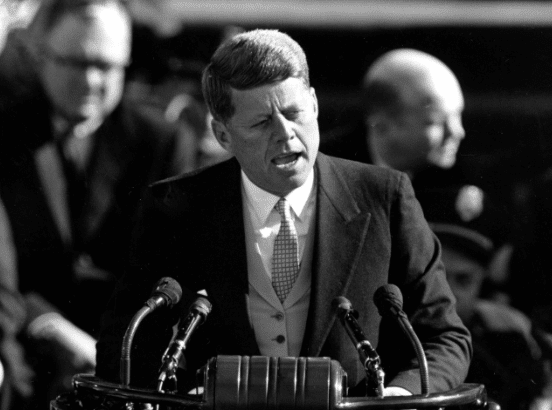
President John F. Kennedy’s Inaugural Address (1961)
Vice President Johnson, Mr. Speaker, Mr. Chief Justice, President Eisenhower, Vice President Nixon, President Truman, Reverend Clergy, fellow citizens:
We observe today not a victory of party but a celebration of freedom–symbolizing an end as well as a beginning–signifying renewal as well as change. For I have sworn before you and Almighty God the same solemn oath our forbears prescribed nearly a century and three-quarters ago.
The world is very different now. For man holds in his mortal hands the power to abolish all forms of human poverty and all forms of human life. And yet the same revolutionary beliefs for which our forebears fought are still at issue around the globe–the belief that the rights of man come not from the generosity of the state but from the hand of God.
We dare not forget today that we are the heirs of that first revolution. Let the word go forth from this time and place, to friend and foe alike, that the torch has been passed to a new generation of Americans–born in this century, tempered by war, disciplined by a hard and bitter peace, proud of our ancient heritage–and unwilling to witness or permit the slow undoing of those human rights to which this nation has always been committed, and to which we are committed today at home and around the world.
Let every nation know, whether it wishes us well or ill, that we shall pay any price, bear any burden, meet any hardship, support any friend, oppose any foe to assure the survival and the success of liberty.
This much we pledge–and more.
To those old allies whose cultural and spiritual origins we share, we pledge the loyalty of faithful friends. United there is little we cannot do in a host of cooperative ventures. Divided there is little we can do–for we dare not meet a powerful challenge at odds and split asunder.
To those new states whom we welcome to the ranks of the free, we pledge our word that one form of colonial control shall not have passed away merely to be replaced by a far more iron tyranny. We shall not always expect to find them supporting our view. But we shall always hope to find them strongly supporting their own freedom–and to remember that, in the past, those who foolishly sought power by riding the back of the tiger ended up inside.
To those people in the huts and villages of half the globe struggling to break the bonds of mass misery, we pledge our best efforts to help them help themselves, for whatever period is required–not because the communists may be doing it, not because we seek their votes, but because it is right. If a free society cannot help the many who are poor, it cannot save the few who are rich.
To our sister republics south of our border, we offer a special pledge–to convert our good words into good deeds–in a new alliance for progress–to assist free men and free governments in casting off the chains of poverty. But this peaceful revolution of hope cannot become the prey of hostile powers. Let all our neighbors know that we shall join with them to oppose aggression or subversion anywhere in the Americas. And let every other power know that this Hemisphere intends to remain the master of its own house.
To that world assembly of sovereign states, the United Nations, our last best hope in an age where the instruments of war have far outpaced the instruments of peace, we renew our pledge of support–to prevent it from becoming merely a forum for invective–to strengthen its shield of the new and the weak–and to enlarge the area in which its writ may run.
Finally, to those nations who would make themselves our adversary, we offer not a pledge but a request: that both sides begin anew the quest for peace, before the dark powers of destruction unleashed by science engulf all humanity in planned or accidental self-destruction.
We dare not tempt them with weakness. For only when our arms are sufficient beyond doubt can we be certain beyond doubt that they will never be employed.
But neither can two great and powerful groups of nations take comfort from our present course–both sides overburdened by the cost of modern weapons, both rightly alarmed by the steady spread of the deadly atom, yet both racing to alter that uncertain balance of terror that stays the hand of mankind’s final war.
So let us begin anew–remembering on both sides that civility is not a sign of weakness, and sincerity is always subject to proof. Let us never negotiate out of fear. But let us never fear to negotiate.
Let both sides explore what problems unite us instead of belaboring those problems which divide us.
Let both sides, for the first time, formulate serious and precise proposals for the inspection and control of arms–and bring the absolute power to destroy other nations under the absolute control of all nations.
Let both sides seek to invoke the wonders of science instead of its terrors. Together let us explore the stars, conquer the deserts, eradicate disease, tap the ocean depths and encourage the arts and commerce.
Let both sides unite to heed in all corners of the earth the command of Isaiah–to “undo the heavy burdens . . . (and) let the oppressed go free.”
And if a beachhead of cooperation may push back the jungle of suspicion, let both sides join in creating a new endeavor, not a new balance of power, but a new world of law, where the strong are just and the weak secure and the peace preserved.
All this will not be finished in the first one hundred days. Nor will it be finished in the first one thousand days, nor in the life of this Administration, nor even perhaps in our lifetime on this planet. But let us begin.
In your hands, my fellow citizens, more than mine, will rest the final success or failure of our course. Since this country was founded, each generation of Americans has been summoned to give testimony to its national loyalty. The graves of young Americans who answered the call to service surround the globe.
Now the trumpet summons us again–not as a call to bear arms, though arms we need–not as a call to battle, though embattled we are– but a call to bear the burden of a long twilight struggle, year in and year out, “rejoicing in hope, patient in tribulation”–a struggle against the common enemies of man: tyranny, poverty, disease and war itself.
Can we forge against these enemies a grand and global alliance, North and South, East and West, that can assure a more fruitful life for all mankind? Will you join in that historic effort?
In the long history of the world, only a few generations have been granted the role of defending freedom in its hour of maximum danger. I do not shrink from this responsibility–I welcome it. I do not believe that any of us would exchange places with any other people or any other generation. The energy, the faith, the devotion which we bring to this endeavor will light our country and all who serve it–and the glow from that fire can truly light the world.
And so, my fellow Americans: ask not what your country can do for you–ask what you can do for your country.
My fellow citizens of the world: ask not what America will do for you, but what together we can do for the freedom of man.
Finally, whether you are citizens of America or citizens of the world, ask of us here the same high standards of strength and sacrifice which we ask of you. With a good conscience our only sure reward, with history the final judge of our deeds, let us go forth to lead the land we love, asking His blessing and His help, but knowing that here on earth God’s work must truly be our own.

Abraham Lincoln Gettysburg Address 1863
Four score and seven years ago our fathers brought forth on this continent, a new nation, conceived in Liberty, and dedicated to the proposition that all men are created equal.
Now we are engaged in a great civil war, testing whether that nation, or any nation so conceived and so dedicated, can long endure. We are met on a great battle-field of that war. We have come to dedicate a portion of that field, as a final resting place for those who here gave their lives that that nation might live. It is altogether fitting and proper that we should do this.
But, in a larger sense, we can not dedicate – we can not consecrate – we can not hallow – this ground. The brave men, living and dead, who struggled here, have consecrated it, far above our poor power to add or detract. The world will little note, nor long remember what we say here, but it can never forget what they did here. It is for us the living, rather, to be dedicated here to the unfinished work which they who fought here have thus far so nobly advanced. It is rather for us to be here dedicated to the great task remaining before us – that from these honored dead we take increased devotion to that cause for which they gave the last full measure of devotion – that we here highly resolve that these dead shall not have died in vain – that this nation, under God, shall have a new birth of freedom – and that government of the people, by the people, for the people, shall not perish from the earth.
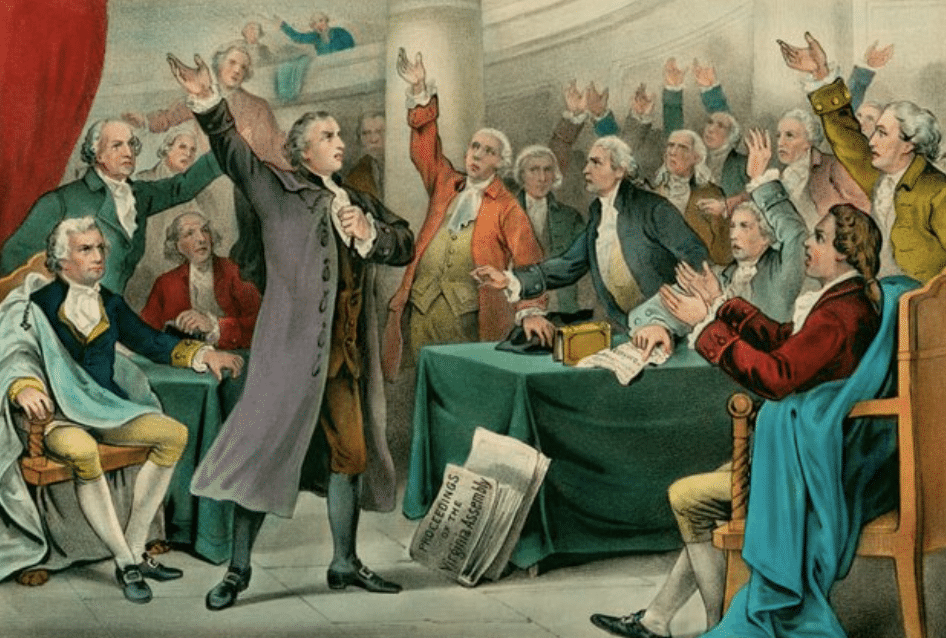
Give Me Liberty Or Give Me Death Speech by Patrick Henry to the Second Virginia Revolutionary Convention meeting at St. John’s Church, Richmond, on March 23, 1775
No man thinks more highly than I do of the patriotism, as well as abilities, of the very worthy gentlemen who have just addressed the House. But different men often see the same subject in different lights; and, therefore, I hope it will not be thought disrespectful to those gentlemen if, entertaining as I do opinions of a character very opposite to theirs, I shall speak forth my sentiments freely and without reserve. This is no time for ceremony. The questing before the House is one of awful moment to this country. For my own part, I consider it as nothing less than a question of freedom or slavery; and in proportion to the magnitude of the subject ought to be the freedom of the debate. It is only in this way that we can hope to arrive at truth, and fulfill the great responsibility which we hold to God and our country. Should I keep back my opinions at such a time, through fear of giving offense, I should consider myself as guilty of treason towards my country, and of an act of disloyalty toward the Majesty of Heaven, which I revere above all earthly kings.
Mr. President, it is natural to man to indulge in the illusions of hope. We are apt to shut our eyes against a painful truth, and listen to the song of that siren till she transforms us into beasts. Is this the part of wise men, engaged in a great and arduous struggle for liberty? Are we disposed to be of the number of those who, having eyes, see not, and, having ears, hear not, the things which so nearly concern their temporal salvation? For my part, whatever anguish of spirit it may cost, I am willing to know the whole truth; to know the worst, and to provide for it. I have but one lamp by which my feet are guided, and that is the lamp of experience. I know of no way of judging the future but by the past. And judging by the past, I wish to know what there has been in the conduct of the British ministry for the last ten years to justify those hopes with which gentlemen have been pleased to solace themselves and the House. Is it that insidious smile with which our petition has been lately received? Trust it not, sir; it will prove a snare to your feet. Suffer not yourselves to be betrayed with a kiss. Ask yourselves how this gracious reception of our petition comports with those warlike preparations which cover our waters and darken our land. Are fleets and armies necessary to a work of love and reconciliation? Have we shown ourselves so unwilling to be reconciled that force must be called in to win back our love? Let us not deceive ourselves, sir. These are the implements of war and subjugation; the last arguments to which kings resort. I ask gentlemen, sir, what means this martial array, if its purpose be not to force us to submission? Can gentlemen assign any other possible motive for it? Has Great Britain any enemy, in this quarter of the world, to call for all this accumulation of navies and armies? No, sir, she has none. They are meant for us: they can be meant for no other. They are sent over to bind and rivet upon us those chains which the British ministry have been so long forging. And what have we to oppose to them? Shall we try argument? Sir, we have been trying that for the last ten years. Have we anything new to offer upon the subject? Nothing. We have held the subject up in every light of which it is capable; but it has been all in vain. Shall we resort to entreaty and humble supplication? What terms shall we find which have not been already exhausted? Let us not, I beseech you, sir, deceive ourselves. Sir, we have done everything that could be done to avert the storm which is now coming on. We have petitioned; we have remonstrated; we have supplicated; we have prostrated ourselves before the throne, and have implored its interposition to arrest the tyrannical hands of the ministry and Parliament. Our petitions have been slighted; our remonstrances have produced additional violence and insult; our supplications have been disregarded; and we have been spurned, with contempt, from the foot of the throne! In vain, after these things, may we indulge the fond hope of peace and reconciliation. There is no longer any room for hope. If we wish to be free– if we mean to preserve inviolate those inestimable privileges for which we have been so long contending–if we mean not basely to abandon the noble struggle in which we have been so long engaged, and which we have pledged ourselves never to abandon until the glorious object of our contest shall be obtained–we must fight! I repeat it, sir, we must fight! An appeal to arms and to the God of hosts is all that is left us!
They tell us, sir, that we are weak; unable to cope with so formidable an adversary. But when shall we be stronger? Will it be the next week, or the next year? Will it be when we are totally disarmed, and when a British guard shall be stationed in every house? Shall we gather strength by irresolution and inaction? Shall we acquire the means of effectual resistance by lying supinely on our backs and hugging the delusive phantom of hope, until our enemies shall have bound us hand and foot? Sir, we are not weak if we make a proper use of those means which the God of nature hath placed in our power. The millions of people, armed in the holy cause of liberty, and in such a country as that which we possess, are invincible by any force which our enemy can send against us. Besides, sir, we shall not fight our battles alone. There is a just God who presides over the destinies of nations, and who will raise up friends to fight our battles for us. The battle, sir, is not to the strong alone; it is to the vigilant, the active, the brave. Besides, sir, we have no election. If we were base enough to desire it, it is now too late to retire from the contest. There is no retreat but in submission and slavery! Our chains are forged! Their clanking may be heard on the plains of Boston! The war is inevitable–and let it come! I repeat it, sir, let it come.
It is in vain, sir, to extenuate the matter. Gentlemen may cry, Peace, Peace– but there is no peace. The war is actually begun! The next gale that sweeps from the north will bring to our ears the clash of resounding arms! Our brethren are already in the field! Why stand we here idle? What is it that gentlemen wish? What would they have? Is life so dear, or peace so sweet, as to be purchased at the price of chains and slavery? Forbid it, Almighty God! I know not what course others may take; but as for me, give me liberty or give me death!
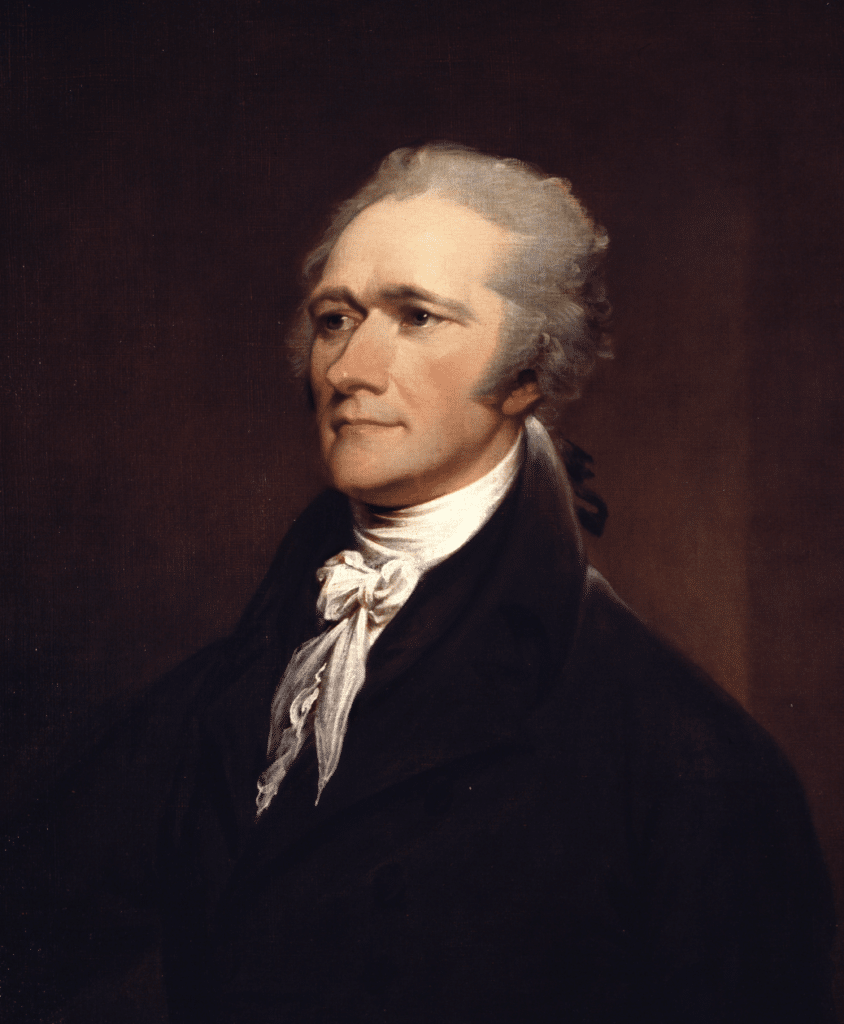
Alexander Hamilton Speech in the New York Convention, 24 June 1788
I am persuaded, Mr. Chairman, that I in my turn, shall be indulged, in addressing the committee—We all, with equal sincerity, profess to be anxious for the establishment of a republican government, on a safe and solid basis—It is the object of the wishes of every honest man in the United States, and I presume I shall not be disbelieved, when I declare, that it is an object of all others the nearest and most dear to my own heart. The means of accomplishing this great purpose become the most important study, which can interest mankind. It is our duty to examine all those means with peculiar attention, and to chuse the best and most effectual. It is our duty to draw from nature, from reason, from examples, the justest principles of policy, and to pursue and apply them in the formation of our government. We should contemplate and compare the systems, which, in this examination, come under our view, distinguish, with a careful eye, the defects and excellencies of each, and discarding the former, incorporate the latter, as far as circumstances will admit, into our constitution. If we pursue a different course and neglect this duty, we shall probably disappoint the expectations of our country and of the world. In the commencement of a revolution, which received its birth from the usurpations of tyranny, nothing was more natural, than that the public mind should be influenced by an extreme spirit of jealousy. To resist these encroachments, and to nourish this spirit, was the great object of all our public and private institutions. The zeal for liberty became predominant and excessive. In forming our confederation, this passion alone seemed to actuate us, and we appear to have had no other view than to secure ourselves from despotism. The object certainly was a valuable one, and deserved our utmost attention: But, Sir, there is another object, equally important, and which our enthusiasm rendered us little capable of regarding—I mean a principle of strength and stability in the organization of our government, and vigor in its operations. This purpose could never be accomplished but by the establishment of some select body, formed peculiarly upon this principle. There are few positions more demonstrable than that there should be in every republic, some permanent body to correct the prejudices, check the intemperate passions, and regulate the fluctuations of a popular assembly. It is evident that a body instituted for these purposes must be so formed as to exclude as much as possible from its own character, those infirmities, and that mutability which it is designed to remedy. It is therefore necessary that it should be small, that it should hold its authority during a considerable period, and that it should have such an independence in the exercise of its powers, as will divest it as much as possible of local prejudices. It should be so formed as to be the center of political knowledge, to pursue always a steady line of conduct, and to reduce every irregular propensity to system. Without this establishment, we may make experiments without end, but shall never have an efficient government. It is an unquestionable truth, that the body of the people in every country desire sincerely its prosperity: But it is equally unquestionable, that they do not possess the discernment and stability necessary for systematic government. To deny that they are frequently led into the grossest errors by misinformation and passion, would be a flattery which their own good sense must despise. That branch of administration especially, which involves our political relation 2 with foreign states, a community will ever be incompetent to. These truths are not often held up in public assemblies—but they cannot be unknown to any who hear me. From these principles it follows that there ought to be two distinct bodies in our government—one which shall be immediately constituted by and peculiarly represent the people, and possess all the popular features; another formed upon the principles, and for the purposes before explained. Such considerations as these induced the convention who formed your state constitution, to institute a senate upon the present plan. The history of ancient and modern republics had taught them, that many of the evils which these republics suffered arose from the want of a certain balance and mutual controul indispensable to a wise administration—They were convinced that popular assemblies are frequently misguided by ignorance, by sudden impulses and the intrigues of ambitious men; and that some firm barrier against these operations was necessary: They, therefore, instituted your senate, and the benefits we have experienced, have fully justified their conceptions. Now Sir, what is the tendency of the proposed amendment? To take away the stability of government by depriving the senate of its permanency: To make this body subject to the same weakness and prejudices, which are incident to popular assemblies, and which it was instituted to correct; and by thus assimilating the complexion of the two branches, destroy the balance between them. The amendment will render the senator a slave to all the capricious humors among the people. It will probably be here suggested, that the legislatures—not the people— are to have the power of recall. Without attempting to prove that the legislatures must be in a great degree the image of the multitude, in respect to federal affairs, and that the same prejudices and factions will prevail; I insist, that in whatever body the power of recall is vested, the senator will perpetually feel himself in such a state of vassalage and dependence, that he never can possess that firmness which is necessary to the discharge of his great duty to the union. Gentlemen, in their reasoning, have placed the interests of the several states, and those of the United States in contrast—This is not a fair view of the subject—They must necessarily be involved in each other. What we apprehend is, that some sinister prejudice, or some prevailing passion, may assume the form of a genuine interest. The influence of these is as powerful as the most permanent conviction of the public good; and against this influence we ought to provide. The local interests of a state ought in every case to give way to the interests of the Union: For when a sacrifice of one or the other is necessary, the former becomes only an apparent, partial interest, and should yield, on the principle that the small good ought never to oppose the great one. When you assemble from your several counties in the legislature, were every member to be guided only by the apparent interest of his county, government would be impracticable. There must be a perpetual accommodation and sacrifice of local advantage to general expediency—But the spirit of a mere popular assembly would rarely be actuated by this important principle. It is therefore absolutely necessary that the senate should be so formed, as to be unbiassed by false conceptions of the real interests, or undue attachment to the apparent good of their several states. 3 Gentlemen indulge too many unreasonable apprehensions of danger to the state governments—They seem to suppose, that the moment you put men into the national council, they become corrupt and tyrannical, and lose all their affection for their fellow-citizens. But can we imagine that the senators will ever be so insensible of their own advantage, as to sacrifice the genuine interest of their constituents? The state governments are essentially necessary to the form and spirit of the general system. As long, therefore, as Congress have a full conviction of this necessity, they must, even upon principles purely national, have as firm an attachment to the one as to the other. This conviction can never leave them, unless they become madmen. While the constitution continues to be read, and its principles known, the states must, by every rational man, be considered as essential component parts of the union; and therefore the idea of sacrificing the former to the latter is totally inadmissible. The objectors do not advert to the natural strength and resources of the state governments, which will ever give them an important superiority over the general government. If we compare the nature of their different powers, or the means of popular influence which each possesses, we shall find the advantage entirely on the side of the states. This consideration, important as it is, seems to have been little attended to. The aggregate number of representatives throughout the states may be two thousand. Their personal influence will therefore be proportionably more extensive than that of one or two hundred men in Congress. The state establishments of civil and military officers of every description, infinitely surpassing in number any possible correspondent establishments in the general government, will create such an extent and complication of attachments, as will ever secure the predilection and support of the people. Whenever, therefore, Congress shall meditate any infringement of the state constitutions, the great body of the people will naturally take part with their domestic representatives. Can the general government withstand such a united opposition? Will the people suffer themselves to be stripped of their privileges? Will they suffer their legislatures to be reduced to a shadow and a name? The idea is shocking to common sense. From the circumstances already explained, and many others which might be mentioned, results a complicated, irresistable check, which must ever support the existence and importance of the state governments. The danger, if any exists, flows from an opposite source.—The probable evil is, that the general government will be too dependent on the state legislatures, too much governed by their prejudices, and too obsequious to their humours; that the states, with every power in their hands, will make encroachments on the national authority, till the union is weakened and dissolved. Every member must have been struck with an observation of a gentleman from Albany [John Lansing, Jr.]. Do what you will, says he, local prejudices and opinions will go into the government. What! shall we then form a constitution to cherish and strengthen these prejudices? Shall we confirm the distemper instead of remedying it? It is undeniable that there must be a controul somewhere. Either the general interest is to controul the particular interests, or the contrary. If the former, then certainly the government ought to be so framed, as to render the power of controul efficient to all intents and purposes; if the latter, a striking absurdity follows: The controuling powers must be as numerous as the varying interests, and 4 the operations of government must therefore cease: For the moment you accommodate these differing interests, which is the only way to set the government in motion, you establish a general controuling power. Thus, whatever constitutional provisions are made to the contrary, every government will be at last driven to the necessity of subjecting the partial to the universal interest. The gentlemen ought always, in their reasoning, to distinguish between the real, genuine good of a state, and the opinions and prejudices which may prevail respecting it: The latter may be opposed to the general good, and consequently ought to be sacrificed; the former is so involved in it, that it never can be sacrificed. Sir, the main design of the convention, in forming the senate, was to prevent fluctuations and cabals: With this view, they made that body small, and to exist for a considerable period. Have they executed this design too far? The senators are to serve six years. This is only two years longer than the senators of this state hold their places. One third of the members are to go out every two years; and in six, the whole body may be changed. Prior to the revolution, the representatives in the several colonies were elected for different periods; for three years, for seven years, &c. Were those bodies ever considered as incapable of representing the people, or as too independent of them? There is one circumstance which will have a tendency to increase the dependence of the senators on the states, in proportion to the duration of their appointments. As the state legislatures are in continual fluctuation, the senator will have more attachments to form, and consequently a greater difficulty of maintaining his place, than one of shorter duration. He will therefore be more cautious and industrious to suit his conduct to the wishes of his constituents. Sir, when you take a view of all the circumstances which have been recited, you will certainly see, that the senators will constantly look up to the state governments, with an eye of dependence and affection. If they are ambitious to continue in office, they will make every prudent arrangement for this purpose, and, whatever may be their private sentiments of politics, they will be convinced, that the surest means of obtaining a re-election will be a uniform attachment to the interests of their several states. The gentlemen to support their amendment have observed that the power of recall, under the old government, has never been exercised. There is no reasoning from this. The experience of a few years, under peculiar circumstances, can afford no probable security that it never will be carried into execution, with unhappy effects. A seat in congress has been less an object of ambition; and the arts of intrigue, consequently, have been less practised. Indeed, it has been difficult to find men, who were willing to suffer the mortifications, to which so feeble a government and so dependent a station exposed them. Sir, if you consider but a moment the purposes, for which the senate was instituted, and the nature of the business which they are to transact, you will see the necessity of giving them duration. They, together with the President, are to manage all our concerns with foreign nations: They must understand all their interests, and their political systems. This knowledge is not soon acquired—But a very small part is gained in the closet. Is it desirable then that new and unqualified members should be continually thrown into that body? When public bodies are engaged in the exercise of general powers, you cannot judge of the propriety of their conduct, but from the result of their systems. They may be forming plans, which require time and 5 diligence to bring to maturity. It is necessary, therefore, that they should have a considerable and fixed duration, that they may make their calculations accordingly. If they are to be perpetually fluctuating, they can never have that responsibility which is so important in republican governments. In bodies subject to frequent changes, great political plans must be conducted by members in succession: A single assembly can have but a partial agency in them, and consequently cannot properly be answerable for the final event. Considering the senate therefore with a view to responsibility, duration is a very interesting and essential quality. There is another view, in which duration in the senate appears necessary. A government, changeable in its policy, must soon lose its sense of national character, and forfeit the respect of foreigners—Senators will not be solicitous for the reputation of public measures, in which they have had but a temporary concern, and will feel lightly the burthen of public disapprobation, in proportion to the number of those who partake of the censure. Our political rivals will ever consider our mutable counsels as evidence of deficient wisdom, and will be little apprehensive of our arriving at any exalted station in the scale of power. Such are the internal and external disadvantages which would result from the principle contended for. Were it admitted, I am firmly persuaded, Sir, that prejudices would govern the public deliberations, and passions rage in the counsels of the union. If it were necessary, I could illustrate my subject by historical facts: I could travel through an extensive field of detail, and demonstrate that wherever the fatal principle of—the head suffering the controul of the members, has operated, it has proved a fruitful source of commotions and disorder. This, Sir, is the first fair opportunity that has been offered, of deliberately correcting the errors in government. Instability has been a prominent and very defective feature in most republican systems.—It is the first to be seen, and the last to be lamented by a philosophical enquirer. It has operated most banefully in our infant republics. It is necessary that we apply an immediate remedy, and eradicate the poisonous principle from our government. If this be not done, Sir, we shall feel, and posterity will be convulsed by a painful malady.